

Wine Fulfillment Services for Wineries and DTC Shipments
A winemaker's job is crafting unforgettable wines. It is not memorizing shipping permit requirements across 48 states. It is not to negotiate FedEx surcharges or manage warehouse humidity levels at 2 AM. And it is definitely not to explain to a loyal wine club member why their allocation arrived with a cracked bottle and a heat-damaged label.
But that is the reality for wineries selling direct to consumers. The moment a winery opens an online store or launches a wine club, it inherits a full logistics operation. Someone has to track inventory, manage temperature-controlled storage, stay on top of compliance paperwork across dozens of states, coordinate carriers, and make sure packaging can survive five days in a ground shipping network during August. That is a lot of operational weight for a team whose expertise is winemaking.
Most wineries are not built for this. They are built to grow grapes and make wine. The gap between what a winery does well and what DTC shipping demands is exactly where professional wine fulfillment services create value.
This article breaks down what wine fulfillment involves, why it matters in a market where DTC shipment volumes dropped 15% in 2025, and how to evaluate a wine logistics company that actually understands the operational constraints of shipping alcohol across the country.
Introduction to the Wine Industry
The wine industry, much like any other complex ecosystem, operates on a delicate balance of passion and pragmatism, where vineyard dreams meet the harsh realities of regulatory compliance and logistical nightmares. If you've ever worked with a boutique winery struggling to scale their direct-to-consumer operations, you know the frustration firsthand. One day you're discussing the subtle notes of terroir, and the next you're knee-deep in temperature-controlled shipping requirements and state-by-state alcohol regulations that would make even seasoned logistics professionals break out in a cold sweat.
The marketplace has become a battlefield where consumer preferences shift faster than a sommelier can decant a vintage Bordeaux. Wineries find themselves navigating a maze of distribution channels, wine club memberships, and DTC sales that often feel more like solving a Rubik's cube blindfolded than running a business.
Wine fulfillment services have emerged as the unsung heroes in this chaotic landscape, though many winery owners initially view them with the same skepticism they'd reserve for someone suggesting they add ice cubes to their premium Pinot Noir. The reality is brutal—temperature-sensitive shipping isn't just about keeping wine from turning into expensive vinegar; it's about maintaining the integrity of years of meticulous craftsmanship while wrestling with carriers who treat your precious cargo like they're shipping paper towels.
The rise of DTC wine sales has fundamentally shifted the game. Professional wine fulfillment has evolved from a nice-to-have service to an absolute necessity, particularly as consumers who've grown accustomed to Amazon's two-day delivery expectations now demand the same level of service from their favorite vintners.
Why Wine Fulfillment Matters in A Shifting Wine Industry

The wine industry is navigating a structural reset. Declining consumption among younger demographics, rising production costs, and a contracting DTC channel are forcing wineries to rethink distribution.
A 2026 DTC Wine Shipping Report found that the largest wineries, those producing more than 500,000 cases annually, suffered a sharp DTC volume drop at 23%. All wine types tracked by the report saw lower shipment volumes compared to 2024. Buyers of lower-priced wines are leaving the DTC channel fastest.
Wholesale is struggling too. Wine sales through distributors fell 8% in the 12 months through August 2024. Online wine sales, too, surged during COVID but have since declined by 42% from their 2022 peak.
In this environment, wine clubs have become the most important DTC channel. Club sales surpassed tasting room sales for the first time in 2022 and now account for roughly 39% of all DTC revenue. But club signups are slowing because tasting room traffic is down approximately8% year over year.
The implication for fulfillment is direct. When every club shipment, every online order, and every tasting room purchase that gets shipped matters more to the bottom line, the operational quality and care behind those shipments becomes a competitive differentiator. Wineries cannot afford missed deliveries, compliance violations, or damaged bottles, making careful handling and attentive customer service essential in wine fulfillment services.
How Wine Fulfillment Services Actually Work
Wine fulfillment services cover the complete operational cycle between a customer placing an order and a bottle arriving at their door. A wine fulfillment provider handles every step of the process, including temperature-controlled warehousing, order picking and packing, carrier coordination through FedEx and UPS, regulatory compliance management, and returns handling.
Wineries send products to specialized, temperature-controlled warehouses that are logged into a real-time inventory system.
What separates wine fulfillment from standard ecommerce logistics is the product itself. Wine is heavy and fragile. It is legally regulated at the federal and state level. And depending on the varietal and storage conditions, it can be temperature-sensitive enough to degrade in transit. A general-purpose 3PL warehouse designed for apparel or electronics does not have the infrastructure, the licensing, or the operational knowledge to ship wine safely and legally.
Professional wine fulfillment services operate purpose-built facilities with climate monitoring, specialized bottle packaging, and compliance engines that verify shipping eligibility before each order leaves the building. The best providers maintain order accuracy rates above 99%. For a product category where each bottle represents a premium purchase and a direct customer relationship, that level of precision matters.
Typical Benefits of Outsourcing Wine Fulfillment
Faster delivery through multi-node fulfillment networks with fulfillment centers strategically located closer to major population centers to optimize distribution.
Reduced in-house warehousing costs. No investment in climate-controlled storage or seasonal staff.
Built-in regulatory compliance support across all 48 US states that permit DTC wine shipping.
Access to volume-discounted carrier rates through FedEx and UPS.
Bundled services including wine club subscription logistics, private labeling, and branded packaging.
Industry consolidation has created multi-node fulfillment networks that reduce coast-to-coast transit times for wine shipments. Instead of shipping every order from a single warehouse in Napa, fulfillment providers position inventory across the country. This means shorter transit windows, lower shipping costs, and less time that wine spends exposed to ambient temperature during ground transport.
Pick, Pack, and Ship: Wine Fulfillment Operations Explained
The pick, pack, and ship process is where fulfillment quality becomes tangible. It is also where most errors happen if systems and training are not in place.
Standard wine fulfillment workflows handle everything from single-bottle orders to 12 or 18-bottle multi-carton club shipments. Each order type has different packaging requirements. A single bottle needs snug protection inside a corrugated shipper. A mixed 6-pack requires divider inserts. A full case may ship in its original packaging or be repacked depending on carrier requirements.
Speed matters. Most professional fulfillment providers offer same-day shipping for orders received before a designated cutoff time. Cutoff windows typically fall between 12:00 PM and 2:00 PM local time, though they vary by fulfillment node and carrier pickup schedule. Same-day processing capability directly correlates with lower order-to-delivery lead times and higher customer satisfaction.
Fulfillment Performance SLAs
The best wine fulfillment operations are measured against clear service level agreements. Key metrics include order accuracy rate, on-time shipping percentage, and average order-to-ship latency. Best-in-class providers report accuracy rates exceeding 99%, meaning fewer than 1 in 100 orders contains an error.
These SLAs matter because they are customer-facing outcomes. An inaccurate order leads to a disappointed customer. A late shipment during a club release window is a potential cancellation. Professional fulfillment turns these operational details into measurable, accountable performance standards.
Wine Shipping and Packaging for Damage Prevention
Wine is one of the most challenging products to ship safely. Bottles are dense and fragile. Glass breaks on impact. Corks can fail under temperature stress. And unlike most consumer goods, the contents of the bottle can be permanently altered by a few hours of exposure to extreme heat or cold.
Professional wine fulfillment services use packaging systems engineered specifically for these risks.
Molded pulp inserts prevent bottle-to-bottle contact and absorb shock during ground transport.
Recycled pulp dividers separate bottles within multi-pack cartons.
Shock-resistant outer cartons are rated for the weight and fragility of wine shipments.
Insulated liners and gel packs protect against summer heat during seasonal shipping windows.
Weather hold protocols delay shipments when forecasted temperatures at the destination exceed safe thresholds.
Outer carton ratings and void-fill requirements vary by carrier service and regional routing. FedEx and UPS each have specific packaging and labeling guidelines for alcohol shipments. Noncompliant packaging can result in shipment refusal, fines, or voided insurance claims.
Leading fulfillment providers maintain breakage rates well below 1%. That level of protection is the result of packaging design, handler training, and carrier-specific compliance. It is not something most wineries can replicate in-house without significant investment.
Wine Logistics and Temperature-Controlled Warehousing
Wine logistics encompasses the full supply chain required to move wine from production to the customer. It includes carrier selection, route optimization, warehousing, and cold-chain management for a product that responds poorly to temperature swings.
Unlike craft beer or cold-pressed juice, wine does not always require active refrigeration during transport. But it does require stable conditions. Most wines store best between 45°F and 65°F. Humidity control matters because dry air can shrink corks and allow oxidation. Vibration during long-term storage can disturb sediment and affect aging.
Professional wine fulfillment warehouses are designed around these requirements. These facilities are powered by advanced climate monitoring and logistics systems, featuring zone-based temperature controls, continuous climate monitoring with automated alerts, restricted access, and 24/7 security systems.
Wine Storage vs. General Beverage Cold Chain
Wine storage requirements differ significantly from other beverage categories. The table below compares temperature needs, shelf life, and primary risks across common beverage types.
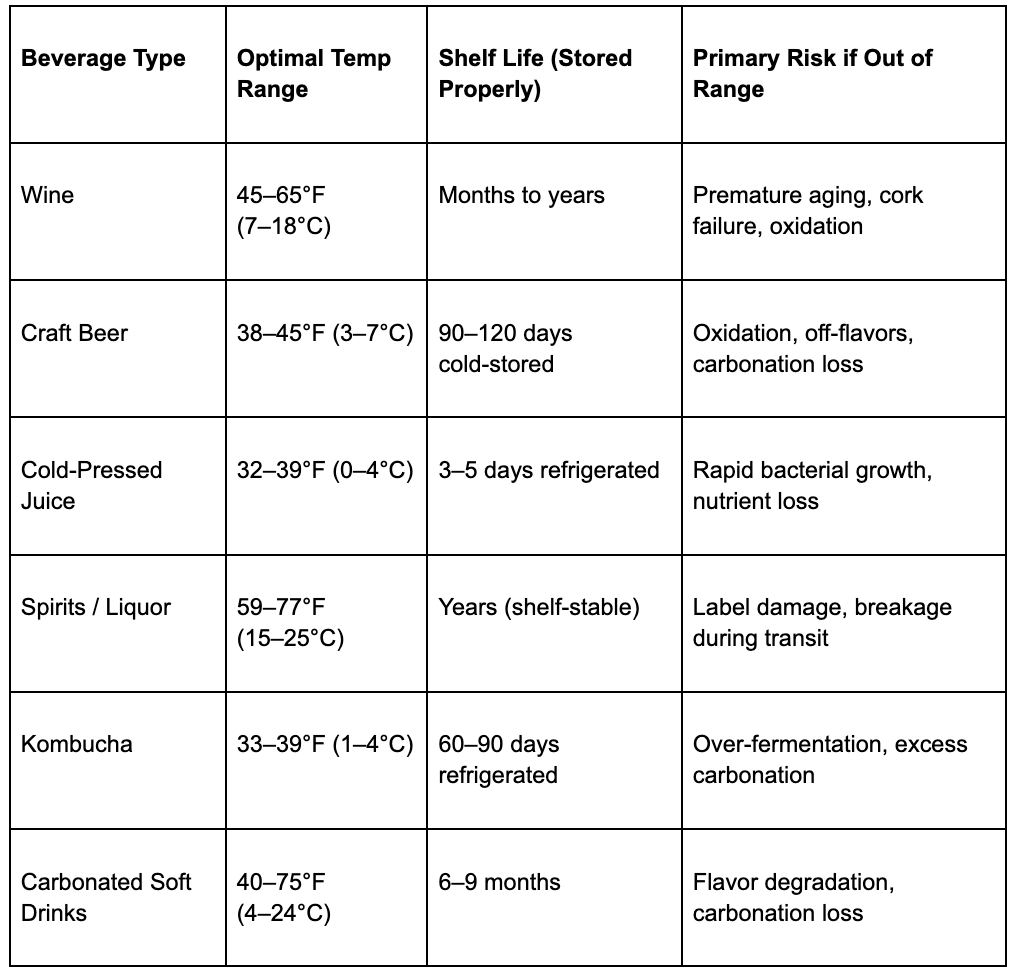
Note: Ranges are general guidelines. Always confirm the manufacturer's specific temperature requirements before shipping. For a deeper look at cold chain logistics across all beverage categories, see our full guide to beverage logistics.
Forsla's beverage logistics infrastructure is built around these temperature and handling requirements. From cold chain management to carrier optimization, Forsla helps wineries and beverage brands maintain product integrity from warehouse to doorstep.
Inventory Management and Stock Visibility
Effective wine inventory management requires more than shelf space. Fulfillment providers use FIFO (First-In, First-Out) inventory rotation to ensure older vintages ship before newer stock. Cycle counts verify physical inventory against system records. Lot tracking supports vintage-specific recalls if quality issues arise.
Real-time inventory systems give wineries visibility across multiple sales channels and provide critical information for managing operations efficiently. When a bottle sells through the online store, it is immediately reflected in wine club allocation counts and tasting room availability. This prevents overselling and helps wineries plan production around actual demand patterns.
Distributed warehousing further strengthens logistics. By positioning wine inventory in facilities closer to major population centers, fulfillment providers reduce transit distances, lower per-bottle shipping costs, and shorten delivery windows.
WineDirect Fulfillment and Platform Integrations
Many wineries run their ecommerce and wine club management through WineDirect, one of the most widely used platforms in the wine industry. WineDirect fulfillment integrations connect a winery’s online storefront, customer database, and order management system directly to the fulfillment warehouse.
This connectivity enables real-time inventory visibility, automated order routing, shipment tracking, and performance analytics. When a customer places an order on a winery’s website, the fulfillment system receives it instantly and begins processing. No manual entry. No CSV uploads. No lag.
Platform-level analytics support smarter business decisions. Wineries can forecast demand based on historical order patterns, optimize pick paths within the warehouse, and track sales channel performance across club, ecommerce, and tasting room shipments.
To optimize your distribution operations, learn more about the features and benefits of WineDirect fulfillment and platform integrations.
Fulfillment Portal Features for DTC Wine
Modern fulfillment portals give wineries a unified dashboard showing real-time inventory levels, order status, shipping updates, return requests, and compliance documentation. Embedded analytics report accuracy rates, on-time performance, and average resolution times for service issues.
Self-serve features make day-to-day operations easier. The portal provides helpful tools and support for wineries, allowing them to reroute shipments, place delivery holds, upload batch orders, and generate compliance reports without waiting for an account manager.
Beyond WineDirect, leading fulfillment providers also integrate with Shopify, Commerce7, VinSuite, and other ecommerce platforms. The key requirement is seamless data flow between the sales channel and the fulfillment operation. Any gap between systems creates errors, delays, and inventory mismatches.
Customer Service, Account Management, and Returns
Wine fulfillment is not purely a warehouse operation. The customer service layer determines how issues get resolved and how the winery-fulfillment partnership functions on a daily basis.
Dedicated account managers are provided by most wine fulfillment services to handle day-to-day operations and needs. These account managers assist clients with order picking, packing, shipping, inventory management, and ensuring seamless logistics operations. When a shipment is delayed, damaged, or returned, the account manager is the point of contact who keeps the winery informed and drives resolution.
Quick response times from account managers enhance customer service in wine fulfillment, especially during high-volume shipping windows like club releases, holiday campaigns, and seasonal promotions. Effective communication with clients helps ease concerns and improves customer service. Having a nice, friendly, and approachable customer service team—where someone personally answers the phone and provides updates—makes every interaction more positive and reassuring for wineries.
Returns Handling for Wine Shipments
Returns workflows for wine are more complex than standard ecommerce returns. Alcohol cannot simply be reshipped to a new address without compliance clearance. Returned wine requires disposition decisions: can it be restocked, does it need to be destroyed, or is it eligible for credit?
Professional fulfillment providers handle restocking protocols, credit processing, damage claim mediation with carriers, and documentation for returned shipments. These workflows must be compliance-aware at every step.
Pricing, Shipping Rates, and Volume Discounts
Understanding fulfillment costs is essential for wineries to accurately forecast their per-bottle economics and per-club-shipment margins. It is important to work with wine fulfillment services that truly understand the unique challenges and requirements of the wine industry.
Common pricing models include per-order processing fees, per-item pick fees, monthly storage fees based on pallet or case count, and seasonal surcharges for temperature-controlled handling during extreme weather periods. Some providers also charge for compliance management, return processing, or custom packaging.
One of the biggest advantages of working with a professional wine fulfillment service is access to carrier volume discounts. Fulfillment providers aggregate shipping volume across dozens or hundreds of winery clients. That collective volume unlocks discounted ground and expedited rates from FedEx and UPS that individual wineries could never negotiate on their own. These savings are passed through to winery partners.
Transparent fee schedules and detailed invoicing help wineries model their fulfillment cost per bottle and per shipment. This visibility is critical for making informed decisions about pricing, promotions, and club tier structures. Copper Peak Logistics provides bespoke solutions for wineries and integrates with e-commerce and compliance engines for enhanced visibility. The FORT System is the leading warehouse management system and fulfillment platform in the wine industry.
DTC Wine Fulfillment and Direct-to-Consumer Strategies
DTC wine fulfillment is the operational infrastructure behind every winery selling directly to consumers. Whether orders come through an online store, a wine club subscription, a tasting room purchase, or a seasonal promotional campaign, the fulfillment process must be fast, accurate, and legally compliant.
Successful direct-to-consumer strategies go beyond simply shipping bottles.
Fulfillment data is used to drive customer engagement.
Segmented promotions are carried out based on purchase history.
Targeted re-order triggers are sent out - timed to when a customer's last shipment is likely running low.
A personalized shipping cadence is created to match club release windows, allocation drops, and holiday buying patterns.
Integration between the fulfillment system and the winery's CRM or tasting room POS is what makes this possible. When order data, shipping history, and customer profiles live in the same ecosystem, wineries can track lifetime value, identify at-risk club members, and run retention campaigns that actually connect to how customers buy.
Multi-node fulfillment is particularly important for DTC wine. A bottle shipped from California to a customer in New York spends multiple days in a ground carrier's network. Each day in transit adds temperature exposure and breakage risk. Positioning inventory in fulfillment centers on both coasts cuts transit time and cold-chain exposure significantly.
Direct to Consumer Sales and Marketing
Direct to consumer (DTC) sales have fundamentally reshuffled the deck in the wine industry, much like how a master sommelier uncorks possibilities that were once sealed tight in traditional distribution channels. Wineries have discovered they can cultivate relationships directly with their customers, harvesting valuable data that ferments into sustainable growth strategies. Through digital storefronts, subscription wine clubs, and personalized marketing campaigns that feel as curated as a private cellar selection, wineries now reach consumers nationwide, effectively bypassing the middlemen who once held the keys to their market access.
That said, the backbone of this transformation lies in what happens after the customer clicks "buy" — the often underestimated world of DTC wine fulfillment. Much has transpired in how wineries approach this challenge, as many discovered that their initial enthusiasm for direct sales quickly soured when faced with the operational complexities of getting bottles from cellar to customer. By partnering with fulfillment specialists who understand the delicate nature of wine logistics, wineries can navigate the treacherous waters of shipping regulations, temperature controls, and the ever-present risk of broken bottles that can shatter customer relationships alongside the glass.
The marketing landscape in the DTC wine space resembles a complex vintage blend — it's all about understanding which elements complement each other and when to introduce them. Fulfillment data becomes the master blender's notebook, enabling targeted promotions that hit the palate at just the right moment, timely reorder reminders that arrive before the last bottle is emptied, and segmented offers based on purchase history that feel as personalized as a handwritten note from the winemaker. This level of insight helps wineries craft campaigns that resonate with their audience's evolving tastes, driving repeat purchases and cultivating the kind of loyalty that spans multiple harvest seasons.
Wine clubs, in particular, have become the crown jewel of professional fulfillment operations, though many wineries initially approached them with makeshift solutions that could best be described as "Frankenstein shipments" — cobbled together from various systems and processes. A simple oversight, like a missed wine allocation or delayed shipment, can disrupt the carefully orchestrated experience that club members expect. For larger wine operations, the complexity multiplies exponentially when you consider internal transfers between sister wineries, international shipping regulations, and the seasonal nature of wine production that creates inventory waves throughout the year.
To that effect, the wine industry has discovered that in a world where consumers expect Amazon-level convenience alongside artisanal authenticity, DTC wine fulfillment transcends mere logistics — it becomes the silent ambassador of the brand. While off-the-shelf solutions may initially appear promising, wineries soon discover their limitations when faced with the unique challenges of shipping liquid gold across state lines, managing allocation lists that read like exclusive guest lists, and maintaining the premium experience that justifies premium pricing. The real challenge emerges in those exception scenarios when things go wrong, and the knowledge to navigate such situations often remains tribal, buried in spreadsheets and the institutional memory of longtime cellar workers who've weathered multiple vintage cycles.
DTC Wine Shipping Compliance and State-Level Regulations
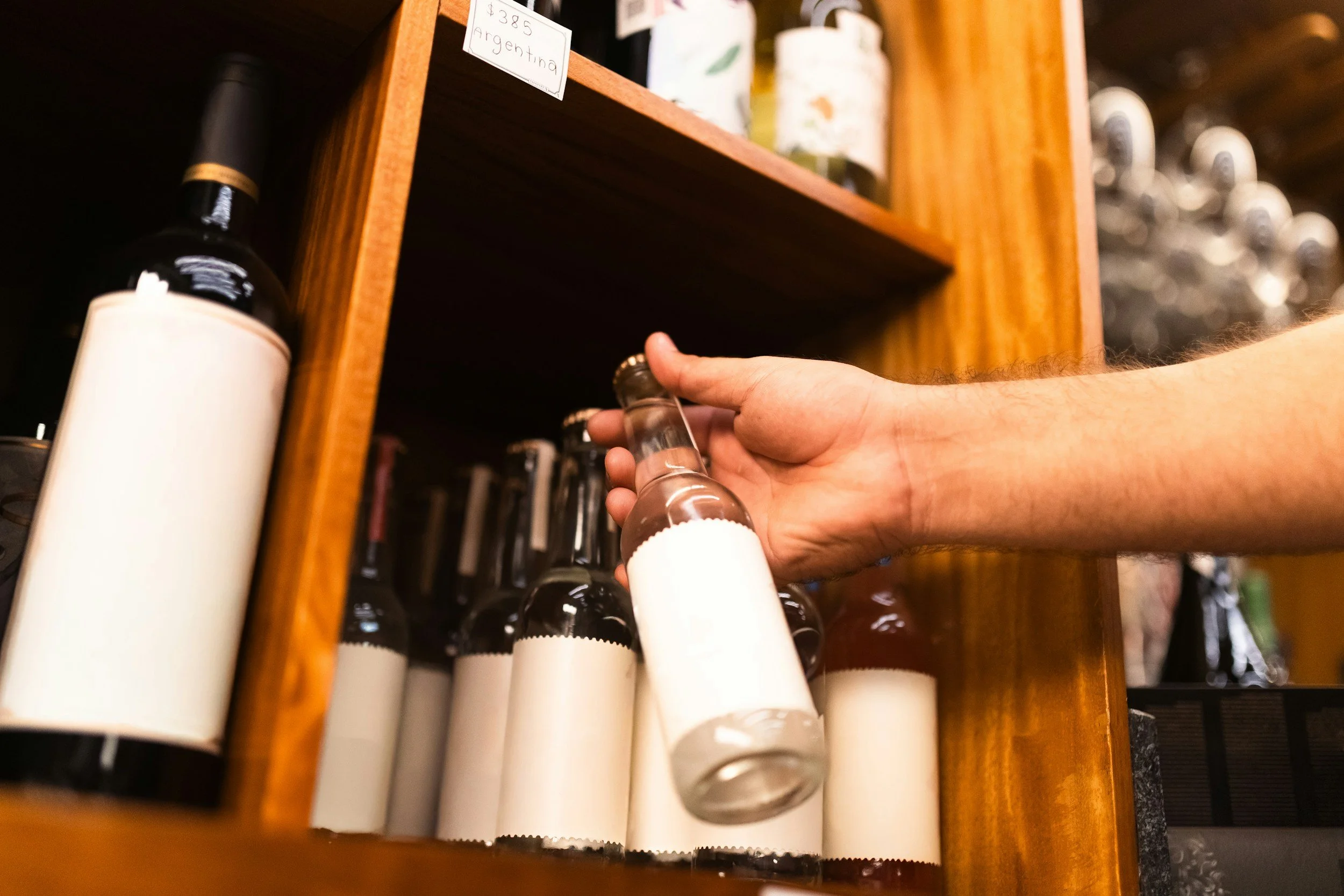
Compliance is the most complex and highest-stakes aspect of wine fulfillment services. Alcohol shipping laws in the United States are regulated at the state level. Each jurisdiction sets its own licensing requirements, volume caps, tax remittance procedures, product registration rules, and delivery verification mandates.
As of late 2025,48 states and Washington D.C. allow some form of DTC wine shipping. Utah remains the only state without any DTC wine shipping rules on the books. Rhode Island requires an on-site purchase before a winery can ship. Arkansas, Mississippi, and Delaware all passed newDTC shipping legislation in 2025, expanding market access for wineries across the US.
Key Compliance Functions
Obtaining and maintaining direct wine shipper permits in each destination state.
Registering wine labels with state alcohol control boards where required.
Collecting and remitting state excise taxes and sales taxes on each shipment.
Verifying buyer age at delivery through adult signature, ID scanning, or third-party verification.
Maintaining shipping records for up to 12 months to satisfy audit requirements.
Blocking orders to states, counties, or zip codes where DTC wine shipping is restricted or prohibited.
Fulfillment providers that specialize in wine shipping integrate compliance management tools directly into the order processing workflow. Before any shipment is generated, the system verifies the destination against current state regulations, confirms licensing status, and flags any restrictions. This prevents violations before they happen.
Third-party fulfillment partners typically manage manifesting, tax collection, bond requirements, and regulatory reporting on behalf of wineries. For wineries expanding into new states, this infrastructure removes months of licensing research and administrative setup.
Forsla's operational systems are designed to support this kind of regulatory complexity. For wineries shipping across multiple states, having a logistics partner with built-in compliance workflows eliminates the risk of fines, license revocation, and carrier refusal.
Carrier-Specific Alcohol Policies
FedEx and UPS both have distinct guidelines for handling and packaging alcohol shipments. These include labeling requirements, age verification protocols at delivery, and restrictions on certain service levels. Noncompliant shipments risk refusal at the carrier facility. In some cases, carriers impose financial penalties for repeated violations.
Professional wine fulfillment providers stay current on carrier policy changes and build them into their packing and labeling procedures. This is one of the day-to-day operational details that is easy to overlook but costly to get wrong.
How to Choose a Wine Fulfillment Partner
The fulfillment provider a winery selects will directly impact shipping costs, customer satisfaction, compliance risk, and brand reputation. Here is what to evaluate when comparing providers.
Verify experience in DTC wine fulfillment, including multi-state compliance and wine club logistics.
Request documented performance metrics: order accuracy, same-day processing rate, average resolution times.
Evaluate technology integrations with WineDirect, Shopify, Commerce7, or your existing ecommerce and POS platforms.
Confirm temperature-controlled warehousing with 24/7 climate monitoring and alarm systems.
Assess scalability for club release windows, seasonal promotions, and new state launches.
Review carrier relationships and whether volume-based FedEx and UPS discounts are passed through.
Ask about sustainability practices: packaging materials, route optimization, and carbon reduction initiatives.
KPIs and Performance Metrics for Wine Fulfillment
You cannot improve what you do not measure. Tracking the right key performance indicators helps wineries and their logistics partners identify problems early, validate fulfillment quality, and make better operational decisions.
Order accuracy rate: The percentage of orders shipped without errors. Best-in-class wine fulfillment providers target 99%+.
On-time shipping rate: The percentage of orders that ship within the committed timeframe.
Average order-to-ship time: How quickly an order moves from placement to carrier pickup.
Damage and breakage rate: The percentage of shipments with broken, leaking, or compromised bottles.
Cost per bottle shipped: Total fulfillment cost divided by units shipped. Tracks efficiency over time.
Benchmarking these metrics against industry averages helps wineries evaluate whether their fulfillment partner is performing at a competitive level. Quarterly performance reviews keep operations aligned and surface improvement opportunities before they become problems.
Retention and repeat-purchase lift are downstream outcomes of strong fulfillment. When customers receive orders on time, in perfect condition, with accurate contents, they renew their club memberships and reorder. That revenue impact is measurable and directly tied to fulfillment performance.
Building a Wine Fulfillment Strategy That Scales with Your Winery
The DTC wine market is no longer rewarding wineries that simply participate in the channel. It is rewarding wineries that execute at a high level.
Fast shipping.
Accurate orders.
Compliant delivery.
Branded packaging that reinforces the customer relationship.
These are the operational standards that drive retention, revenue, and long-term growth.
Professional wine fulfillment services provide the warehousing, technology, compliance infrastructure, and shipping expertise that make this level of execution possible. Whether a winery ships 200 bottles a month or 20,000, the right wine logistics company becomes an extension of the brand.
Ready to build a fulfillment strategy that protects every bottle? Talk to the Forsla team about designing a logistics operation tailored to your winery's distribution network and growth goals.
Conclusion and Future of Wine Fulfillment Services
As the wine industry continues to evolve—and trust me, I've seen plenty of wineries struggle with this transition firsthand—the role of wine fulfillment services will only grow in importance. The reality is that wineries embracing professional fulfillment solutions find themselves better positioned to navigate the regulatory maze (and what a maze it is), meet those ever-escalating customer expectations, and scale their DTC operations without pulling their hair out. The integration of advanced technology, real-time inventory management, and data-driven insights is fundamentally transforming how wineries approach distribution and customer engagement, though many are still piecing together information from different sources using makeshift spreadsheet solutions.
Looking ahead, the future of wine fulfillment will be shaped by continued innovation in logistics, automation, and ecommerce integration—no more shipping air alongside actual wine bottles, if you will. Enhanced temperature control, sustainable packaging, and smarter route optimization will further protect product quality and reduce environmental impact, addressing what has become a never-ending cycle of managing temperature-sensitive shipments and associated delays. As consumer demand for convenience and personalization increases, fulfillment providers will play a pivotal role in helping wineries deliver exceptional experiences—every bottle, every shipment, every time. While off-the-shelf solutions may initially appear promising, wineries often discover their limitations due to the complexity of wine-specific regulations across different states and countries.
By partnering with experienced wine fulfillment experts, wineries can streamline their operations, reduce risk, and focus on what they do best: making outstanding wine and building lasting relationships with their customers. In my experience, wineries are often swamped with harvest timelines and regulatory deadlines that they can't contemplate managing complex fulfillment operations in-house. In a rapidly changing industry where the processes work well 99.9% of the time, the right fulfillment strategy is not just a necessity—it's a catalyst for growth and long-term success, helping navigate those exceptional moments when things inevitably go sideways.
Looking for a great partner to work with for your wine fulfillment needs? Look no further than Forsla. Connect with us today to see how we make a difference to your logistics operations.

Frequently Asked Questions
How does DTC wine shipping work?
DTC wine shipping allows wineries to sell and ship bottles directly to consumers through online stores, wine clubs, and tasting room orders. Each state has its own licensing, tax collection, and age verification requirements that must be met before shipping.
How many US states allow DTC wine shipments?
As of late 2025, 48 states and Washington D.C. permit some form of DTC wine shipping. Utah is the only state with no DTC wine shipping rules. Arkansas, Mississippi, and Delaware all passed new DTC shipping legislation in 2025.
What is WineDirect fulfillment?
WineDirect fulfillment refers to the integration between the WineDirect ecommerce platform and a winery's fulfillment warehouse. It automates order routing, inventory tracking, shipment management, and performance analytics for DTC wine sales.
Why do wineries need a wine logistics company?
A specialized wine logistics company provides expertise in alcohol shipping compliance, temperature-controlled storage, carrier management, and multi-state regulatory requirements. This allows wineries to scale DTC operations without building costly in-house fulfillment infrastructure.
What KPIs should wineries track for fulfillment?
Key metrics include order accuracy rate, on-time shipping percentage, average order-to-ship time, damage and breakage rate, and cost per bottle shipped. Top wine fulfillment providers typically maintain accuracy above 99%.
How do wine clubs benefit from professional fulfillment services?
Wine clubs require scheduled release shipments, subscription management, and personalized packaging. Professional fulfillment services automate these processes, improving member retention and reducing the day-to-day operational burden on winery staff.