

Cold Chain Technology: How It Works and Why It Matters for Beverage Logistics

The distance between a warehouse and a store shelf can be just fifty miles. But for a temperature-sensitive product, those fifty miles represent dozens of micro-decisions that determine whether the product arrives in perfect condition or compromised beyond sale.
Cold chain technology is the system that manages those decisions. It monitors, records, and alerts across the entire journey, from manufacturing through cold storage, transportation, and final delivery. Cold chain technology is critical for many industries, including food and beverage, pharmaceuticals, and chemicals, as they all rely on precise temperature control to maintain product quality, safety, and regulatory compliance. As global demand for perishable goods grows, so does the complexity of keeping them safe. The cold chain market is projected to reach$690 billion by 2033, driven by rising investment in digital solutions, real-time tracking, and automation.
This article explains how cold chain technology works, what each component does, and why the right logistics execution is what separates a functioning cold chain from a costly failure.
What Is Cold Chain Technology?
Cold chain technology is the combination of hardware, software, and data systems used to monitor and control temperature conditions throughout the supply chain.
The term covers far more than refrigerated trucks. It includes:
IoT-enabled temperature sensors that capture data continuously
GPS tracking systems that combine location with environmental conditions
Cloud-based monitoring platforms that aggregate data from multiple points
Predictive analytics tools that identify risk patterns before excursions occur
The goal across all of these components is consistent: keep temperature-sensitive goods within defined temperature ranges, from the point of origin to the final destination.
Cold chain technology is used across the food industry, beverage logistics, pharmaceuticals, and life sciences. Each sector has its own temperature standards, regulatory requirements, and risk profiles. But the underlying principle is the same in all of them: visibility and control prevent loss.
Why Cold Chain Matters More Than Most Businesses Realize
Approximately 30% to 40% of food produced globally is lost or wasted, with a significant portion tied directly to temperature control failures. In the pharmaceutical sector, the WHO estimates that up to 50% of vaccines are wasted globally due to cold chain breakdowns.
Those numbers reflect not just business losses but real public health consequences. Effective cold chain logistics help prevent spoilage and reduce the risk of foodborne illnesses by preventing the growth of harmful bacteria in food and medical supplies.
For the beverage industry, the stakes are different but no less serious. Beer exposed to warm conditions during transit can arrive hazy or flat. Fresh juice stored at fluctuating temperatures develops off-flavors before it ever reaches a retailer. Premium wines can be permanently altered by a single heat exposure event. The damage is often invisible at the point of delivery, but consumers notice it immediately.
Cold chain technology gives businesses the tools to prevent these failures. But technology alone does not guarantee outcomes. Execution does.
Core Components of Cold Chain Technology Systems
Cold chain technology is not a single product. It is a set of interconnected tools, each addressing a different part of the monitoring and management challenge. Cold chain temperature monitoring plays a pivotal role in maintaining product safety, regulatory compliance, and overall supply chain efficiency.
Temperature Sensors
Temperature sensors are the foundation of any cold chain monitoring system. They are embedded inside shipments, placed within cold storage units, and installed in transport vehicles to continuously measure ambient and product temperatures.
Modern sensors offer high-accuracy readings, real-time data transmission, and integration with cloud-based platforms. They can detect micro-fluctuations that older spot-check methods would miss entirely.
When a sensor detects a deviation, it logs the event with a timestamp and triggers an alert. That record becomes part of the shipment's compliance documentation, available for audits or quality assessments.
Temperature Monitoring Systems
Temperature monitoring systems aggregate data from sensors across the entire supply chain. They provide a centralized view of conditions at every stage, whether inside a refrigerated warehouse, at a transit hub, or inside a delivery vehicle.
These systems do more than collect data. By leveraging analytics, they transform complex sensor data into actionable insights that help logistics managers make better decisions and improve cold chain processes. They set threshold-based alerts for temperature deviations, generate detailed logs for regulatory compliance, and give logistics managers a live dashboard of conditions across their operations.
For businesses handling temperature-sensitive goods at volume, these platforms are operational infrastructure, not optional add-ons.
Cold Chain Monitoring in Transit
Transportation is where most temperature excursions occur. Long distances, multiple handoff points, and variable ambient conditions all create risk. Failures in temperature-controlled logistics cost the biopharma industry an estimated $35 billion annually, and a significant share of those losses occur during transit rather than in storage.
Effective cold chain monitoring during transport relies on:
Continuous logging from in-vehicle temperature sensors
Real-time GPS tracking to cross-reference location with temperature events
Automated alerts that notify logistics managers of deviations while a route is still in progress
That last point matters. An alert at the destination is too late. An alert mid-route gives logistics teams a real chance to take corrective action.
GPS Tracking and Real-Time Visibility
GPS tracking tells you where a shipment is. When integrated with temperature data, it tells you exactly where a temperature fluctuation began and how long it lasted.
For long distances and multi-stop routes, this level of visibility is critical. It allows teams to reroute a vehicle, prioritize offloading at risk, or flag a shipment for quality review before it reaches a customer. It also creates the traceability data that supports insurance claims and compliance audits.
Cold Chain Logistics: Moving Temperature-Sensitive Products Safely
Cold chain logistics is the operational process of moving temperature-sensitive goods under controlled conditions. It is not simply a matter of owning the right technology. It is about applying that technology correctly at every step.
A properly run cold chain logistics operation includes:
Transport vehicles pre-cooled before loading begins
Refrigerated warehouses with zone-specific temperature controls
Standardized handling protocols at every transition point
Continuous monitoring throughout every transit leg
Perishable goods, from beverages to frozen food to pharmaceuticals, depend on this operational discipline. One uncontrolled event at a loading dock, one delayed handoff in warm conditions, can initiate a temperature excursion that no monitoring system can reverse.
This is the reason logistics expertise matters as much as the technology itself. Sensors and platforms produce data. Experienced operators act on that data to prevent losses before they happen.
Cold Chain Management: Oversight Across the Entire Supply Chain
Cold chain management is the strategic layer that governs cold chain logistics. It involves planning, coordinating, and overseeing the processes that maintain temperature conditions from manufacturing through to delivery.
Effective cold chain management includes:
Designing temperature-appropriate storage and transport protocols
Training personnel on proper handling procedures for temperature-sensitive cargo
Establishing compliance frameworks aligned with FDA, WHO, and other regulatory standards
Reviewing cold chain data continuously to identify inefficiencies and reduce risk
For businesses operating across multiple markets or long distances, cold chain management provides the governance structure that prevents localized failures from cascading across operations. Choosing logistics solutions and partners that support scalability is equally important, ensuring operations can handle increasing volume as business needs grow.
Cold Storage: The Physical Infrastructure Behind the Cold Chain
Cold storage refers to refrigerated warehouses, cold rooms, and controlled-environment facilities that maintain specific temperature ranges for products in transit or awaiting distribution.
Modern cold storage facilities include:
Zoned temperature control for products with different requirements
IoT-enabled monitoring devices distributed throughout the facility
Automated alerts triggered when any zone deviates from its set threshold
Backup power and redundancy systems to protect against outages
Cold storage is not cheap to build or maintain. It is energy-intensive, capital-heavy, and requires ongoing investment in equipment and compliance. Access to adequate cold storage is also unevenly distributed globally, with significant infrastructure gaps in developing regions. This creates real challenges for global supply chains and underscores the value of logistics partners with established cold storage networks.
Without reliable cold storage at key points in the supply chain, even the most sophisticated monitoring technology cannot fully protect product integrity.
Quality Control and Temperature Standards in Cold Chain Operations
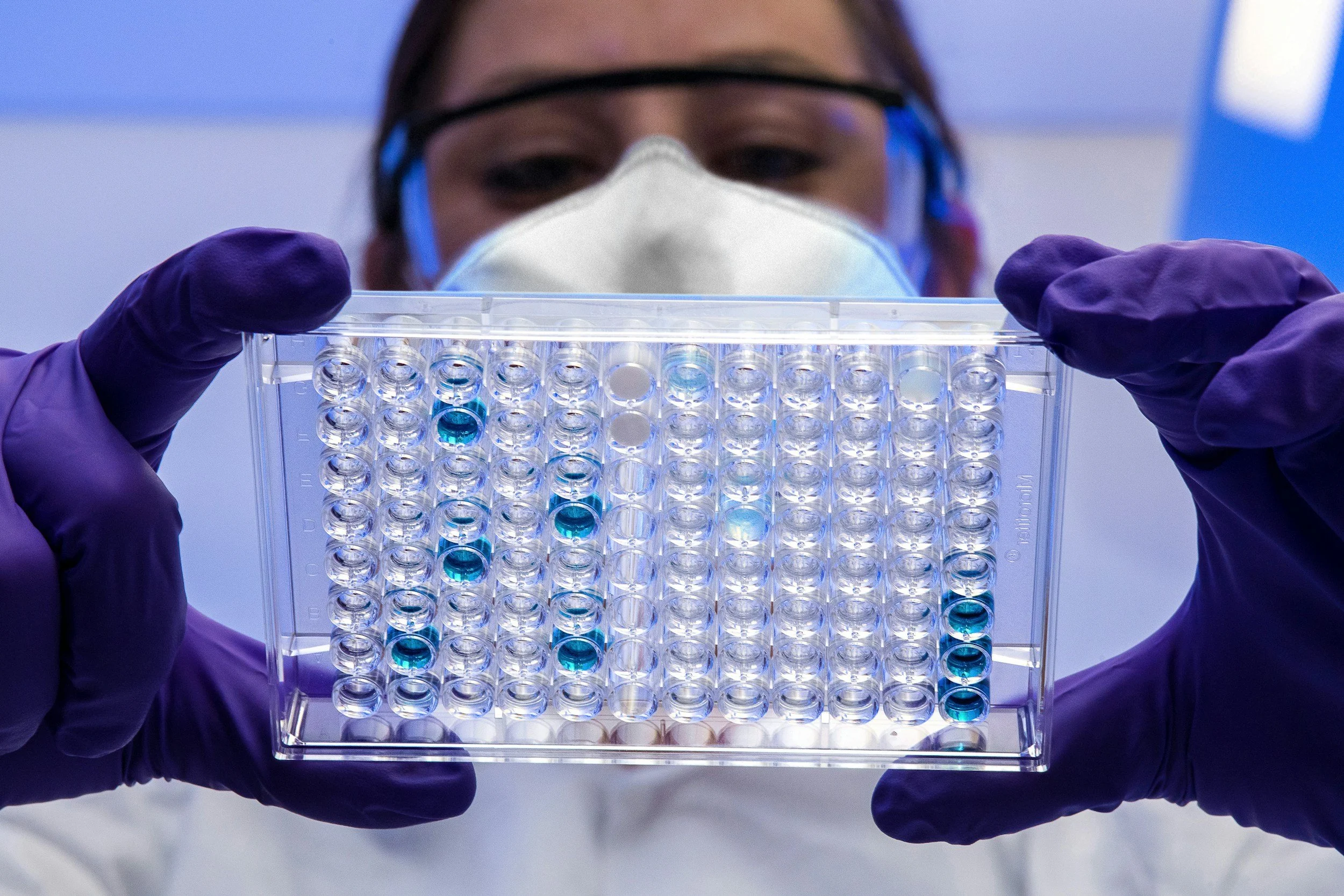
Quality control in cold chain operations is built around adherence to temperature standards. These standards vary by product category and are set by bodies including the FDA and WHO.
For beverage logistics specifically, temperature standards differ by product type.
Carbonated soft drinks are typically stored between 35 and 55°F to preserve carbonation.
Beer is best maintained at 33 to 38°F to protect flavor and stability.
Fresh juices and dairy beverages require stricter cold chain control, generally in the 32 to 40°F range.
Wine has specific requirements depending on whether it is being aged or simply stored for distribution.
Cold chain technology also maintains safety for frozen foods, meat, seafood, and dairy by preventing bacterial growth.
Quality control systems verify that products remain within these ranges at every stage. When a deviation occurs, documentation from temperature monitoring systems allows businesses to assess the impact and make informed decisions about whether a product is suitable for sale.
Regulatory compliance documentation generated automatically by cold chain technology supports audits, insurance assessments, and customer-facing quality guarantees.
Cold Chain Technology in Life Sciences and Pharmaceuticals
The beverage industry is one application of cold chain technology. The pharmaceutical sector and life sciences represent another, where the consequences of temperature control failures are measured in patient outcomes rather than product returns.
Vaccines, biologics, and specialty medications require storage and transport within narrow temperature windows. mRNA vaccines require ultra-cold conditions ranging from -25°C to -70°C depending on the product, conditions that demand specialized cold storage infrastructure and advanced monitoring systems. TheCDC's Vaccine Storage and Handling guidelines set out the specific requirements for each product type, and deviating from them renders doses unusable.
The pharmaceutical industry's investment in cold chain technology has driven significant improvements in sensor precision, predictive analytics, and compliance documentation. Many of those innovations have since been adopted across food and beverage logistics, raising the standard for the entire industry.
Cold Chain Technology Comparison: Tools and Their Functions
Understanding how different cold chain technologies fit together helps businesses evaluate where to invest and what capabilities to prioritize.
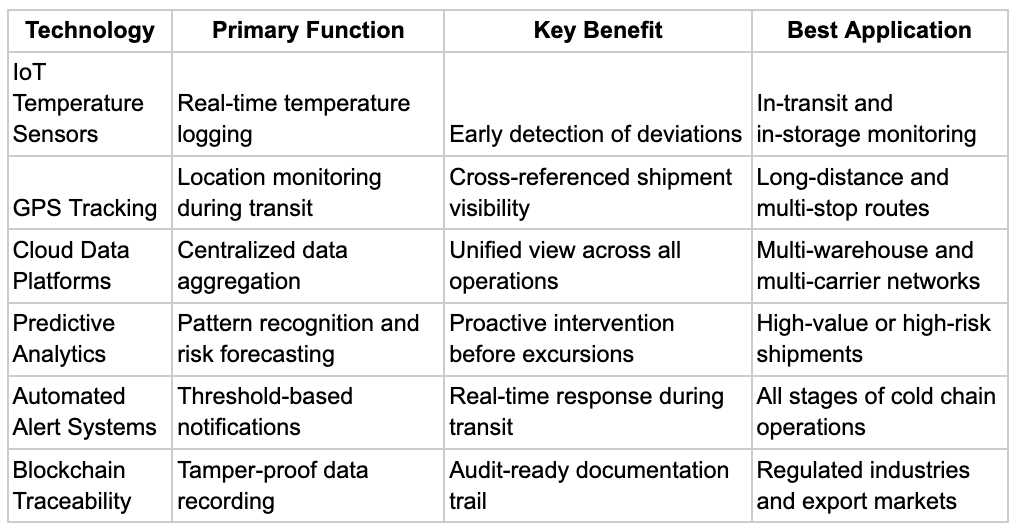
These tools address different challenges. The most effective cold chain operations combine several of them, calibrated to the specific product, route, and regulatory environment involved.
Challenges in Implementing Cold Chain Technology
Cold chain technology delivers real results. Implementing it well is genuinely difficult.
High infrastructure costs. Refrigerated vehicles, cold storage facilities, and monitoring equipment all require significant capital investment. For smaller operators, this creates a real barrier to entry.
Energy consumption. Refrigeration accounts for a large share of cold chain operating costs. The carbon footprint of cold chain logistics is under increasing scrutiny from regulators and customers alike.
Infrastructure gaps in developing regions. Cold chain infrastructure is not evenly distributed. Many markets lack consistent power supplies and refrigerated storage, making it difficult to maintain an unbroken cold chain for global distribution.
Operational complexity at scale. Managing temperature data across dozens of transport legs, storage facilities, and handoff points requires significant coordination. As supply chains grow, so does the complexity of ensuring every link holds.
Human error. Technology monitors. It does not replace trained personnel. Improper loading procedures, missed alerts, and delays at warm loading docks can all result in temperature excursions that the best monitoring systems cannot reverse.
Best Practices for Preventing Temperature Fluctuations in Transit
Most temperature fluctuations are preventable. The following practices reduce risk at every stage of the cold chain:
Pre-cool transport vehicles before loading begins
Minimize door-open time during loading and unloading
Use validated packaging solutions appropriate to the product and route
Implement continuous temperature monitoring on every transit leg
Set up real-time alert protocols with clear escalation steps
Train all handling staff on cold chain requirements for temperature-sensitive cargo
Conduct regular audits of cold storage facilities and transport equipment
These practices do not replace technology. They make the technology effective.
Cold Chain Sustainability and Regulations
Regulatory compliance and sustainability have become two of the defining pressures shaping cold chain logistics today. As demand for temperature-sensitive goods grows across food, beverage, pharmaceuticals, and life sciences, the industry faces tighter scrutiny from regulators and customers alike.
The regulatory landscape is substantial. The FDA, WHO, and European Medicines Agency all set mandatory temperature control standards for the storage and transportation of temperature-sensitive products. These requirements are not guidelines. They are enforceable standards, and failing to meet them can result in product recalls, legal penalties, and lasting damage to business reputation.
To meet these requirements, cold chain operations are investing in advanced temperature monitoring systems and energy-efficient storage solutions. These digital platforms capture real-time data and generate the kind of audit-ready traceability documentation that regulatory bodies expect. The practical benefit extends beyond compliance. The same data that satisfies an FDA audit also reveals inefficiencies, reduces spoilage, and lowers operating costs.
Sustainability has become equally important. Cold chain infrastructure is energy-intensive by nature, and both regulators and customers are paying attention to its carbon footprint. Many operators are responding by integrating renewable energy sources, adopting eco-friendly thermal insulation and packaging solutions, and using optimized routing to reduce unnecessary refrigeration time during transit. These improvements reduce emissions while extending the shelf life of the products they protect.
For cold chain operators, the businesses that treat regulatory compliance and sustainability as operational priorities, not afterthoughts, are the ones building durable competitive advantages. Tighter regulations and rising environmental expectations are not going away. Cold chain operations built around these standards are better positioned to scale, retain customers, and remain viable in an increasingly demanding global market.
What Cold Chain Technology Will Look Like in Five Years
The cold chain technology landscape is moving fast.
AI-powered analytics are making predictive alerts more accurate, shifting operations from reactive monitoring to proactive risk management. Blockchain traceability is enabling tamper-proof documentation across complex global supply chains. Smart sensors are becoming smaller, more affordable, and more capable. Sustainable refrigeration solutions are beginning to reduce the energy footprint of cold chain operations.
For beverage companies, these developments will lower the cost of maintaining a high-quality cold chain while raising the standard across the industry. The businesses best positioned to benefit will be those that have already built the operational discipline to use these tools effectively.
The Operational Partner That Makes Cold Chain Technology Work
Cold chain technology gives businesses visibility. But the gap between visibility and performance is filled by logistics expertise.
A shipment with real-time temperature sensors still needs drivers trained on cold chain protocols. It still needs warehouses that are properly maintained. It still needs coordination between every party involved in the supply chain. The sensors and platforms provide the data. Skilled logistics operators act on that data to prevent losses.
For beverage companies navigating complex distribution networks, this is where the choice of logistics partner becomes critical. Forsla's approach to beverage logistics is built around exactly this principle: the right operational infrastructure, trained personnel, and cold chain compliance frameworks that ensure temperature-sensitive products move safely and efficiently at scale.
Cold Chain Technology: The Competitive Advantage That Protects Your Product
Businesses that take cold chain technology seriously consistently outperform those that treat it as a compliance checkbox.
The benefits compound. Fewer temperature excursions mean less product waste. Less waste means lower costs. Better data means faster, smarter decisions. A demonstrable commitment to cold chain quality builds customer trust that takes years to earn and very little to lose.
For temperature-sensitive goods, cold chain technology is not a logistics concern that sits somewhere in the back office. It is a direct input into product quality, consumer safety, and brand reputation. The companies that recognize that are the ones that compete effectively in global markets.
Looking for a great partner to work with for your cold chain fulfillment needs? Look no further than Forsla. Connect with us today to see how we make a difference to your logistics operations.

FAQs
How does cold chain monitoring work?
Cold chain monitoring uses IoT-enabled temperature sensors, GPS tracking, and real-time data platforms to continuously track conditions from production through to final delivery, triggering alerts when thresholds are exceeded.
What types of temperature sensors are used in cold chain logistics?
Modern cold chain operations use electronic data loggers and wireless temperature sensors that transmit real-time readings to cloud platforms. They are placed inside shipments, inside cold storage units, and within transport vehicles.
Why do temperature fluctuations cause product loss?
Temperature fluctuations accelerate bacterial growth in food and beverages, degrade shelf life, and can compromise the efficacy of pharmaceutical products. Even a brief excursion outside the defined temperature range can render products unsaleable.
What is cold chain management?
Cold chain management is the operational process of planning, coordinating, and overseeing temperature-controlled logistics from manufacturing through to delivery, including staff training, regulatory compliance, and continuous process review.
How does cold storage fit into the cold chain?
Cold storage refers to refrigerated warehouses and cold rooms that hold products at specific temperatures during distribution. Without reliable cold storage at key points, even advanced monitoring technology cannot fully protect product integrity.
What industries rely on cold chain logistics?
The food industry, beverage sector, pharmaceutical industry, life sciences, and retail all depend heavily on cold chain logistics. Any business handling temperature-sensitive goods requires cold chain infrastructure to protect product quality and meet regulatory requirements.
What is a temperature excursion?
A temperature excursion occurs when a product is exposed to temperatures outside its defined safe range during storage or transit. Cold chain monitoring systems log these events and trigger real-time alerts for corrective action.
How does cold chain technology support regulatory compliance?
Cold chain systems generate timestamped data logs, real-time records, and audit-ready documentation that demonstrate compliance with FDA, WHO, and other standards governing temperature-sensitive goods.
What are the main challenges in cold chain implementation?
Key challenges include high infrastructure costs, energy consumption, uneven access to cold storage in developing markets, and the operational complexity of managing multi-leg supply chains at scale.
Can cold chain technology eliminate all product waste?
Cold chain technology significantly reduces product waste by detecting deviations early and enabling corrective action. But technology alone cannot eliminate all waste. Properly trained personnel and sound operational protocols are equally important.