

Cold Chain Transportation Explained: How Temperature-Sensitive Goods Move Through Supply Chains

Every year, billions of dollars worth of perishable goods travel across oceans, highways, and rail networks under tightly controlled temperatures. A single lapse in that control can spoil an entire shipment of seafood, render a batch of vaccines useless, or turn a truckload of craft beer into flat, off-flavor liquid.
Cold chain transportation is the infrastructure that prevents those losses. It is the system of refrigerated storage, temperature-controlled transport, validated packaging, and real-time monitoring that keeps temperature sensitive goods safe from origin to consumption.
The stakes are enormous. The global cold chain logistics market was valued at approximatelyUSD 436 billion in 2025 and is projected to reach nearly USD 1.48 trillion by 2035, growing at a compound annual growth rate of about 13%. That growth reflects surging demand for fresh food delivery, fruits, pharmaceutical distribution, and beverage logistics across every major economy.
Yet the cost of getting it wrong is just as significant. The biopharma industry alone loses overUSD 35 billion annually due to temperature failures during shipping and storage. According to theUNEP, inadequate cold chains contribute to enough food loss to feed an estimated 1 billion people each year.
Maintaining temperature control is essential for various industries, particularly those dealing with perishable goods such as fruits, vegetables, and pharmaceuticals.
This guide covers how cold chain transportation systems work, why cold storage and cold chain shipping matter for product safety, and what companies need to know about maintaining temperature integrity across the supply chain. It also explores how industries like food and beverage, pharmaceuticals, and chemicals rely on these systems to protect quality, meet regulatory compliance standards, and deliver products customers can trust.
Proper packaging and monitoring technologies are critical components of effective cold chain logistics, as they protect products from temperature changes, contamination, and ensure real-time tracking of shipment conditions.
What Is Cold Chain Transportation?
Cold chain transportation is a specialized logistics system designed to maintain strict temperature control over goods from the point of production to the point of consumption. Unlike standard freight, every stage of the journey requires active environmental management. Products may need chilled, refrigerated, frozen, or ultra-low temperature conditions depending on what they are and where they are going.
The term "cold chain" refers to the unbroken sequence of temperature-controlled steps that a product passes through. Think of it as a chain where every link matters. If one link breaks, the entire system fails.
A typical cold chain follows this path:
Production → Cold Storage → Refrigerated Transport → Distribution Center → Retail or End User
At every handoff point in this chain, temperature sensitive shipments face risk. A pallet sitting on a warm loading dock. A refrigeration unit that cycles off during a long haul. A delay at a border crossing where containers sit in direct sunlight for hours. Each of these scenarios can push products outside their validated temperature ranges and compromise quality.
Industries across the world depend on cold chain logistics to maintain product integrity. These include food and beverage supply chains, pharmaceutical and healthcare distribution, chemical and biotechnology manufacturing, agricultural produce and seafood exports, and medical supplies and vaccine distribution.
For companies shipping temperature sensitive cargo, a functioning cold chain is not optional. It is fundamental to safety, shelf life, regulatory compliance, and brand reputation.
How the Cold Chain Works
Maintaining cold chain integrity requires coordination between five interconnected systems.
Storage facilities hold products at validated temperatures before and after transport.
Transportation providers move goods in refrigerated trucks, reefer containers, or temperature-controlled air cargo.
Packaging systems create insulated microenvironments around individual shipments.
Monitoring technology tracks temperature, humidity, and location in real time.
Regulatory compliance processes document every step for audits and quality assurance.

When these systems work together, companies can ship perishable goods across thousands of miles without compromising safety or freshness.
The cold chain plays a particularly critical role in industries where product degradation happens fast outside controlled temperatures. Frozen vegetables, seafood, dairy products like milk, fresh produce, vaccines, and beverages all fall into this category. Even a few hours outside the correct temperature range can mean the difference between a product that reaches the customer in perfect condition and one that gets rejected at the dock.
Cold Chain Logistics: Core Components
Cold chain logistics connects packaging, storage, transport, and monitoring into a single operational system. Each component plays a specific role in protecting temperature sensitive cargo.
Packaging and Temperature Protection
Packaging is the first line of defense against external temperature fluctuations.
A cold shipping package typically includes insulated containers, gel packs or cold packs, dry ice, or phase-change cooling materials. These solutions create a stable microenvironment inside the shipment that shields the product from ambient heat or cold during transit.
Many logistics providers offer a cold shipping package provided as part of their service. These are designed specifically for the product category being shipped.
Gel packs are commonly used for refrigerated shipments that need to stay between 2°C and 8°C. Dry ice is standard for frozen goods or vaccines requiring extremely cold temperatures. Vacuum insulated panels extend thermal protection for shipments with longer transit times.
The packaging system must be validated to confirm it can hold safe temperature ranges for the full duration of the shipment. Without that validation, even a well-designed package can fail under real-world conditions.
Active vs. Passive Cold Chain Systems
Cold chain logistics relies on either active or passive temperature control.
Active systems use powered refrigeration equipment to maintain a constant internal temperature. These include refrigerated trucks with integrated cooling systems, reefer containers with onboard compressors, cold storage warehouses with industrial refrigeration, and air cargo units with dedicated temperature controls.
Passive systems rely on insulated packaging and refrigerants like gel packs, cold packs, or dry ice. They maintain colder temperatures for a limited window without external power. Passive systems are common for smaller shipments of pharmaceuticals, medical supplies, and laboratory samples.
Most large-scale cold chain operations combine both approaches. A pharmaceutical shipment might travel in a passively insulated container inside an actively refrigerated truck, creating layered temperature protection for the journey.
The Role of 3PL Partners
Modern cold chain logistics often involves specialized third-party logistics providers (3PLs) that manage storage, transport, monitoring, and compliance as an integrated service.
These providers coordinate refrigerated fleet management, cold storage operations, shipment tracking, packaging validation, and compliance documentation. For companies that ship temperature sensitive goods but lack the infrastructure to manage every link in the cold chain, a 3PL partnership can be the difference between consistent performance and costly failures.
Cold Storage: Infrastructure for Temperature-Sensitive Goods
Cold storage facilities form the backbone of every cold chain transportation system. These are the fixed points where products are held at controlled temperatures before, during, and after distribution.
Refrigerated Warehouses
Refrigerated warehouses store temperature sensitive products within defined temperature ranges. Most large facilities include multiple temperature zones so that different product types can be stored under the same roof.
A single warehouse might maintain separate zones for chilled foods (0°C to 4°C), dairy and beverages (4°C to 8°C), frozen goods (below -18°C), and pharmaceutical products (2°C to 8°C). Humidity controls are also critical. Too much moisture can damage packaging, promote mold growth, or degrade sensitive products.
Refrigerated storage capturedover 57% of the US cold chain logistics market share in 2025, reflecting how central fixed infrastructure is to the entire supply chain.
Cold Rooms and Blast Freezers
Cold rooms provide controlled environments for short-term storage or staging before transport. They are often positioned near loading docks so products can be held at the correct temperature right up until they are loaded onto refrigerated trucks.
Blast freezers rapidly reduce product temperatures to frozen levels. This fast-freeze process preserves texture, flavor, and nutritional quality for frozen foods like meat, seafood, and vegetables. Slow freezing allows large ice crystals to form inside the product, which damages cell structure. Blast freezing prevents that.
Ultra-Low Temperature Storage
Some pharmaceutical products and vaccines require ultra-low temperature storage at temperatures as low as -70°C. These facilities use specialized refrigeration equipment, redundant cooling systems, and continuous monitoring to prevent any temperature excursions.
Ultra-low storage is essential for mRNA vaccines, biologics, cell and gene therapies, and other specialized medical supplies.Deep-frozen and ultra-low storage below -20°C is projected to grow at nearly 12% annually through 2031, driven by ongoing pharmaceutical innovation.
Cold Chain Shipping: How Transport Modes Protect Perishable Goods
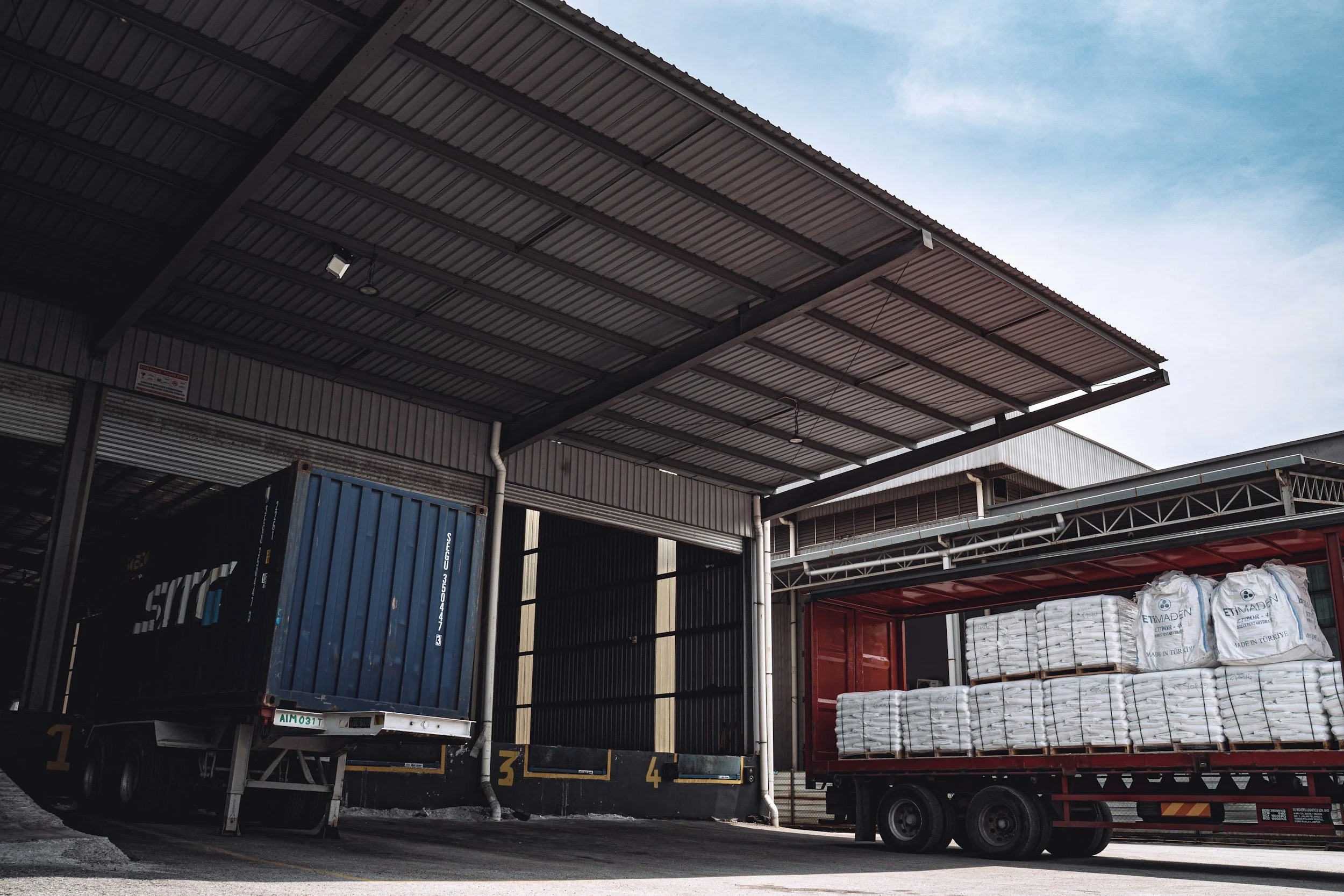
Once products leave cold storage, maintaining temperature control during transport becomes the highest-risk stage of the supply chain. This is where most temperature excursions occur, and where cold chain shipping strategies matter most.
In the oil and gas industry, explosion-proof refrigerated containers are essential for the safe storage and transport of temperature-sensitive materials on oil rigs, tankers, and offshore locations. These specialized containers help ensure safety and compliance in challenging environments where oil and gas operations take place.
The development of refrigerated transport technology has a rich history, including the invention of portable cooling units for transporting perishable goods. Notably, the evolution of refrigeration units in trucks and reefer ships is linked to innovations in movie sound equipment, with some refrigeration businesses even being sold to RCA as part of this technological progression.
Refrigerated Road Transport
Refrigerated trucks are the most widely used method for transporting temperature sensitive shipments. These vehicles have integrated refrigeration units that maintain specific temperature setpoints throughout transit.
Refrigerated road transport is the primary method for moving dairy products like milk, chilled beverages, fresh produce, meat, and seafood. Refrigerated vehicles held thelargest share (38.5%) of the cold chain logistics market in 2025.
Proper loading procedures matter just as much as the refrigeration unit itself. Pallets need to be loaded to allow consistent, 360-degree air circulation inside the trailer. Contact with trailer walls should be avoided. Pre-cooling the trailer before loading prevents a temperature spike when warm ambient air meets the cargo.
Air Freight for Urgent Cold Shipments
Air transport is the go-to for pharmaceutical shipments, vaccines, and other high-value medical supplies where transit time cannot be compromised. Air cargo provides faster delivery but requires specialized packaging and strict compliance with dry ice handling regulations.
Air freight is also increasingly used for time-sensitive food exports, including premium seafood and fresh produce bound for international markets.
Ocean Reefer Containers
For international cold chain shipping, ocean freight relies on refrigerated containers known as reefers. These containers are equipped with cooling systems that maintain frozen or chilled temperatures across weeks-long ocean voyages.
Reefer containers are commonly used for frozen seafood exports, meat shipments, agricultural produce, dairy products, and beverages. They are the workhorse of global cold chain trade.
Temperature Ranges Across Cold Chain Products
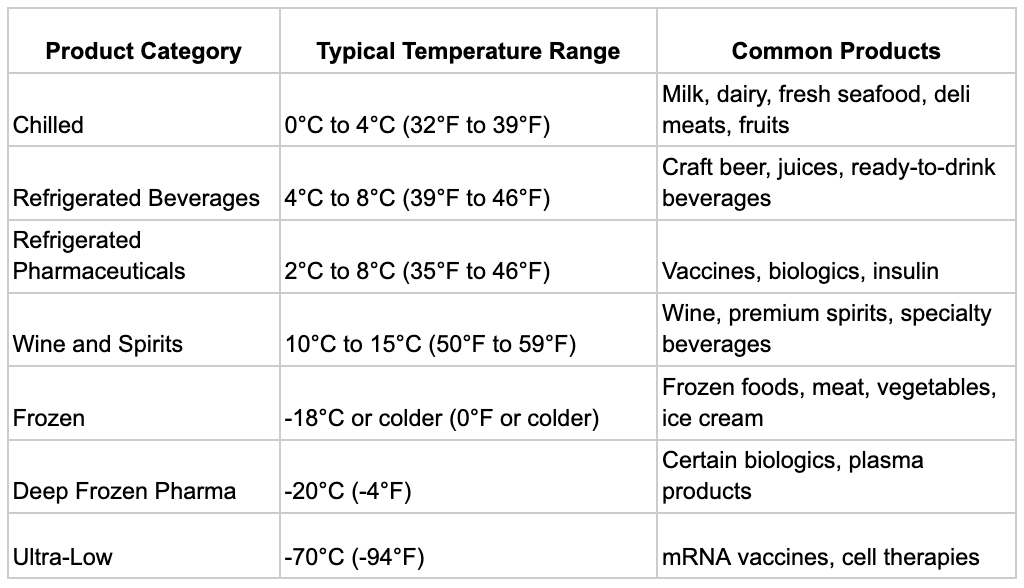
Temperature ranges vary depending on the product category. Maintaining the correct range is what ensures product stability, safety, and shelf life throughout the cold chain. For example, cold chain transportation is essential for fruits and other perishable goods to maintain freshness, prevent spoilage, and control ripening during transportation and storage.
Pharmaceutical Temperature Ranges
Pharmaceutical logistics demands particularly strict temperature control. Many drugs and vaccines remain stable only within narrow ranges. Vaccines typically require storage between 2°C and 8°C. Some biologics must stay frozen at -20°C. Certain mRNA vaccines need -70°C ultra-cold storage.
According to theWHO, approximately 25% of vaccines are damaged due to cold chain malfunctions during distribution and shipping. Temperature deviations can permanently degrade these products, making them unsafe and unusable.
Food and Produce Temperature Ranges
Fresh produce must be stored at temperatures that slow biological processes like ripening and microbial growth. Fruits, in particular, require careful temperature control during cold chain transportation to maintain freshness, prevent spoilage, and control ripening throughout transportation and storage. Bananas are stored around 12°C to 14°C. Leafy vegetables do best near 0°C to 2°C. Seafood is stored just above freezing.
Frozen foods, including vegetables, meat, and prepared meals, must remain at -18°C or colder to prevent texture degradation and bacterial growth. For global food supply chains, maintaining these ranges prevents spoilage and protects consumer safety.
Beverage Temperature Ranges
Beverages are among the most temperature-sensitive product categories in cold chain shipping. Craft beer, for example, performs best when stored at4°C to 6°C. Anything above 6°C is associated with quality loss, off-flavors, and premature aging. Wine requires consistent temperatures between about 10°C and 15°C. Even spirits, while more resilient, benefit from controlled ambient storage to preserve character and label integrity.
For beverage brands scaling into new markets, the cold chain is not just a logistics concern. It is a quality assurance system. A distributor shipping temperature-sensitive beverages across state lines or international borders needs the same rigor in cold chain management as a pharmaceutical company shipping vaccines. This is exactly the kind of challenge that specialist beverage logistics providers likeForsla are built to handle.
Monitoring Technology in Cold Chain Transportation
Cold chain monitoring technology provides visibility into shipment conditions throughout every stage of transit and storage. Without it, companies are flying blind.
Modern logistics systems rely on IoT sensors and real-time data tracking to detect temperature deviations before they become product losses. These monitoring systems collect data on temperature, humidity, shock and vibration, and GPS location.
Telematic control units installed in refrigerated trucks and containers serve as the central hub for data collection. They transmit readings to cloud-based platforms where logistics teams can view conditions in real time.
If a refrigeration unit fails mid-transit, alerts can notify operators immediately. That early warning gives teams time to reroute, repair, or transfer the shipment before the cargo is compromised.
Continuous monitoring also generates the detailed data logs required for regulatory compliance and quality audits. Without those records, companies face difficulties proving that their cold chain maintained integrity from origin to delivery.
Regulatory Compliance in Cold Chain Logistics
Cold chain transportation must comply with strict regulatory standards designed to protect public health. These regulations govern how temperature sensitive goods are stored, transported, and documented.
Major regulatory frameworks include
FDA food safety regulations (including theFSMA Rule 204, which requires detailed traceability records for high-risk foods),
Good Distribution Practice (GDP) guidelines for pharmaceutical transport,
WHO standards for vaccine distribution,
HACCP food safety systems, and IATA air cargo handling regulations for dangerous goods and dry ice.
Compliance requires companies to maintain detailed documentation: temperature logs, equipment maintenance records, packaging validation reports, and shipment traceability records.
Failure to comply with these regulations leads to product recalls, financial penalties, and loss of customer trust. For beverage companies navigating alcohol transport regulations, compliance is even more complex. In the US, alcohol shipping laws vary by state, and carriers must meet FDA, TTB, FSMA, and HACCP standards for beverage handling.
Risk Management and Contingency Planning
Cold chain systems face multiple operational risks that can disrupt temperature control at any point in the supply chain.
Common risks include
refrigeration equipment failure,
power outages at storage facilities,
transit delays at borders or distribution hubs,
door-open events during loading and unloading,
incorrect packaging configurations that fail to hold temperature
Companies that take cold chain integrity seriously implement contingency planning procedures. These include
maintaining backup cold storage facilities,
keeping spare refrigeration equipment on standby,
establishing emergency rerouting protocols for shipments in transit,
validating holdover time for packaging systems so teams know exactly how long a passive solution will protect the cargo if active cooling fails.
Modern route planning software can also optimize delivery routes to minimize risks to temperature sensitive cargo. Shorter transit times, fewer handoffs, and fewer dock events all reduce the window of vulnerability.
Emerging Innovations in Cold Chain Transportation
Cold chain logistics is evolving fast. Several innovations are reshaping how companies monitor, protect, and transport temperature sensitive goods.
Blockchain traceability creates tamper-resistant temperature records across the supply chain. Every reading is logged on an immutable ledger, improving transparency for regulators, customers, and supply chain partners.
Advanced packaging materials including next-generation phase-change materials and high-performance insulation are extending thermal protection durations for passive shipments. Thegel packs segment is projected to see the fastest growth in cold chain packaging through 2035.
Energy-efficient refrigeration using advanced compressors, trans-critical CO2 systems, and solar-powered units is helping companies reduce fuel consumption and emissions. Sustainability is becoming a competitive differentiator in cold chain logistics, with providers investing in renewable diesel, electric trailer units, and solar rooftops for warehouses.
AI-powered route optimization helps carriers plan routes that minimize temperature risk, reduce fuel use, and avoid delays. Combined with real-time IoT monitoring, these tools give logistics teams unprecedented control over shipment conditions.
Autonomous refrigerated transport is also in early-stage pilots. Companies like Kodiak Robotics are testing hands-free reefer lanes between distribution centers, with the potential to address driver shortages and improve consistency on long-haul cold chain routes.
Choosing a Cold Chain Logistics Provider
Selecting the right cold chain logistics partner can make or break a company’s ability to protect temperature sensitive cargo at scale.
Key factors to evaluate include
access to refrigerated transport equipment and fleet capacity,
the provider’s cold storage facility network and geographic coverage,
monitoring technology and real-time tracking capabilities,
regulatory compliance expertise across relevant frameworks,
validated packaging solutions for the specific product category.
It is also important to consider whether the provider offers convenient logistics services and contact methods, ensuring a hassle-free experience for customers seeking support or inquiries.
Companies should also assess whether the provider can scale operations as shipment volumes grow. A logistics partner that handles 500 pallets a month needs different systems than one that handles 50,000.
For beverage brands in particular, the cold chain logistics provider must understand the unique requirements of alcohol and temperature-sensitive drink shipping. This includes state-by-state compliance in the US, humidity control for label integrity, vibration protection for carbonated products, and the ability to manage multiple temperature zones within a single facility.Forsla specializes in exactly this space, offering end-to-end beverage logistics built around the specific demands of cold chain shipping for alcohol and specialty drinks.
Why Cold Chain Transportation Defines Product Quality
Cold chain transportation is essential for protecting the safety, quality, and integrity of temperature sensitive goods across global supply chains. From cold storage infrastructure and refrigerated transport to monitoring technology and regulatory compliance, every stage plays a role in preserving what matters: product quality that customers can trust.
Industries from food and agriculture to pharmaceuticals and biotechnology depend on these systems. So does the beverage industry, where a single temperature excursion during transit can ruin the flavor profile that a brewer, winemaker, or distiller spent months perfecting.
The companies that maintain strict temperature control, invest in real-time monitoring, and partner with experienced logistics providers will reduce spoilage, meet compliance requirements, and deliver consistent quality to customers around the world.
As global demand for temperature sensitive shipments continues to grow, the importance of resilient cold chain transportation systems will only increase. The supply chains that perform best will be the ones where every link in the cold chain holds.
Looking for a great partner to work with for your cold chain transport needs? Look no further than Forsla. Connect with us today to see how we make a difference to your logistics operations.

Frequently Asked Questions
What is cold chain transportation?
Cold chain transportation is a temperature-controlled logistics system that maintains specific temperature ranges for perishable goods from the point of production to the point of consumption. It integrates cold storage, refrigerated transport, insulated packaging, and monitoring technology to protect product quality throughout the supply chain.
What products require cold chain shipping?
Products that require cold chain shipping include fresh produce, dairy, meat, seafood, frozen foods, pharmaceuticals, vaccines, biologics, medical supplies, chemicals, and temperature-sensitive beverages like craft beer, wine, and juices. Any product that degrades outside a defined temperature range depends on cold chain logistics.
What temperature ranges are used in cold chain logistics?
Temperature ranges in cold chain logistics vary by product. Chilled goods are stored at 0°C to 4°C, refrigerated pharmaceuticals at 2°C to 8°C, frozen foods at -18°C or colder, and ultra-low items like mRNA vaccines at -70°C. Beverages typically require storage between 4°C and 15°C depending on the product type.
What is cold storage in the supply chain?
Cold storage refers to temperature-controlled warehousing facilities that maintain specific conditions for perishable goods before and after distribution. These facilities often feature multiple temperature zones, humidity controls, and redundant refrigeration systems to protect product integrity during storage.
What is the difference between active and passive cold chain systems?
Active cold chain systems use powered refrigeration units like reefer trucks and cold storage compressors to maintain temperature. Passive systems rely on insulated packaging with gel packs, cold packs, or dry ice. Many operations combine both for layered protection during cold chain shipping.
Why do beverages need cold chain logistics?
Temperature-sensitive beverages like craft beer, wine, and juices can lose flavor, clarity, and safety when exposed to heat during transit. Craft beer stored above 6°C is associated with accelerated quality loss. Wine exposed to temperature swings can develop off-flavors. Cold chain logistics preserves the drinking experience from brewery or vineyard to the customer's glass.
How does real-time monitoring work in cold chain transportation?
IoT sensors and telematic control units installed in refrigerated trucks, reefer containers, and cold rooms collect data on temperature, humidity, location, and vibration. This data is transmitted to cloud platforms in real time, allowing logistics teams to detect deviations and take corrective action before products are compromised.
What are the biggest risks in cold chain transportation?
Common risks include refrigeration equipment failure, power outages, transit delays, door-open events during loading, and incorrect packaging. Companies mitigate these through backup cold storage, spare equipment, emergency rerouting, and validated holdover time procedures.
How do I choose a cold chain logistics provider?
Evaluate providers based on their refrigerated transport fleet, cold storage network, monitoring technology, regulatory compliance expertise, and validated packaging solutions. For beverage logistics, also consider whether the provider understands alcohol shipping regulations, humidity control, and multi-temperature zone management.