

How Cold Chain Shipping Protects Product Quality for Beverage Companies
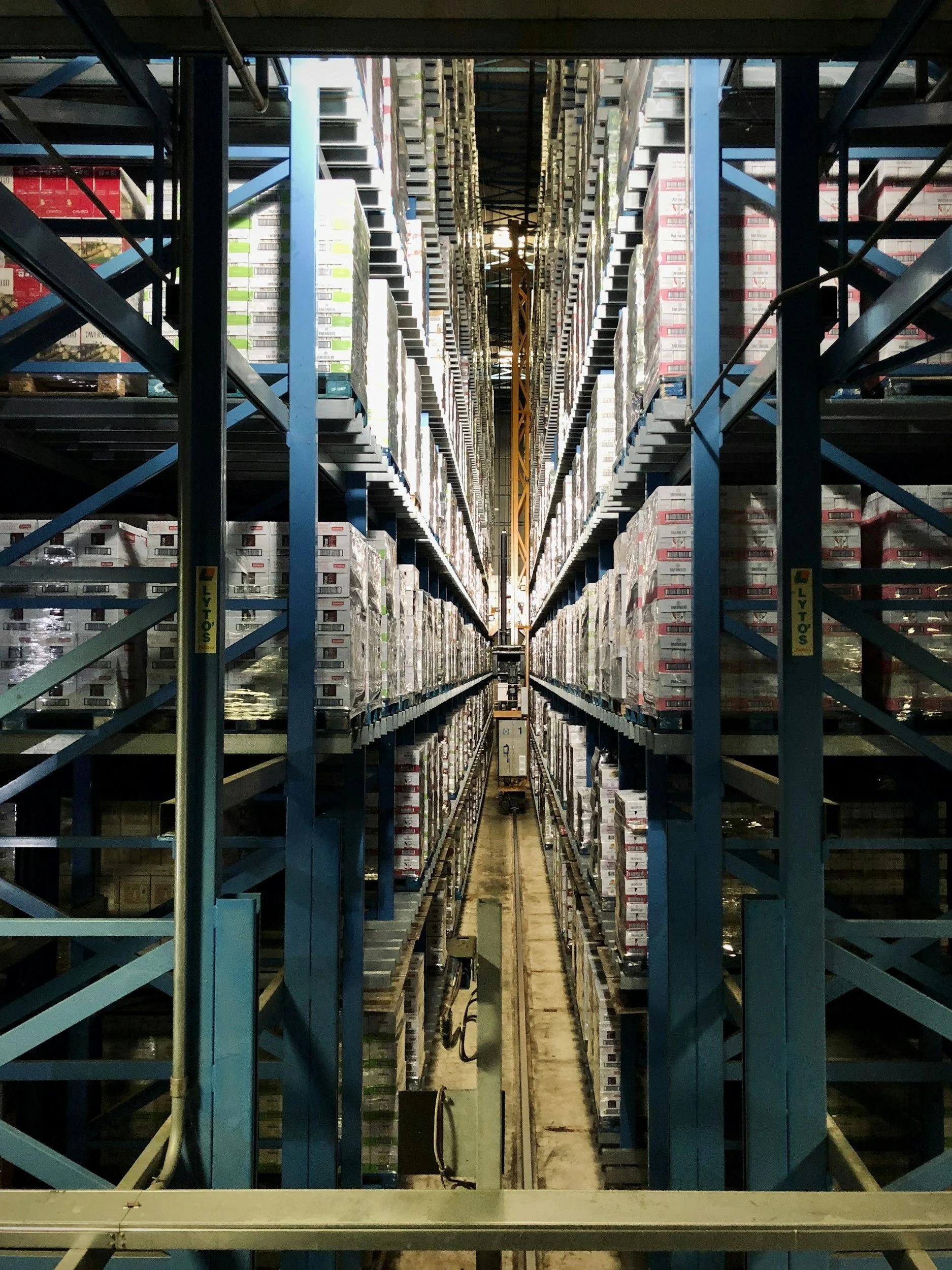
Cold chain shipping keeps beverages safe from the moment they leave the production floor until they reach the end customer. For brands selling cold-pressed juice, kombucha, dairy drinks, or functional beverages, temperature control during transit matters. Get it right, and the product tastes exactly as intended. Get it wrong, and the product arrives spoiled, flat, or unsafe.
The stakes are high. According to theUNEP, roughly 14% of all food produced globally is lost before reaching consumers. Inadequate refrigeration is a leading cause. Beverages are especially vulnerable here. Products with live cultures, fresh ingredients, or sensitive nutrients can spoil after even a brief temperature excursion. That kind of failure costs brands thousands per rejected load.
These challenges are not limited to beverages. They apply to a wide range of cold chain goods, which include perishable and temperature-sensitive products. Cold chain shipping is primarily used for perishable food and life sciences products, including biologics, vaccines, and medical devices. This is especially critical for industries that require strict temperature control, particularly those in food and life sciences, to ensure product safety, efficacy, and quality.
Theglobal cold chain logistics market reflects this urgency. Valued at approximately $436 billion in 2025, the market is projected to grow at a CAGR of nearly 13% through 2035. Refrigerated vehicles alone accounted for 38.5% of the market in 2025, underscoring how central temperature controlled transportation is to the global economy.
This guide breaks down how cold chain shipping works for the beverage industry. It covers the infrastructure that supports temperature integrity, common risks that threaten perishable cargo, and the technologies that help cold chain shippers protect product quality across every mile.
Why the Beverage Industry Requires Cold Chain Shipping
Most people think of meat or seafood when they hear “cold chain.” But beverages are just as vulnerable to temperature damage. The beverage industry handles a wide range of temperature sensitive products, many of which contain ingredients that degrade rapidly outside of controlled environments.
Cold-pressed juices lose their nutritional value and develop off-flavors when exposed to temperatures above 39°F.
Kombucha and probiotic beverages contain live cultures that can die or over-ferment outside their ideal range.
Dairy drinks carry spoilage and food safety risks when stored above 38°F.
Functional beverages and ready-to-drink coffees may lose active ingredients or develop texture issues.
Even beverages marketed as shelf stable can suffer from freezing cold temperatures or excessive heat. Carbonation, flavor profiles, and packaging stability are all at risk. When transporting goods such as these, maintaining the correct temperature throughout transit is essential to ensure quality and safety. Cold chain logistics also supports the distribution of fresh produce, seafood, and meat products, which require strict temperature control to prevent spoilage.
The food and beverage industry depends on strict temperature standards to protect product integrity at every stage. Temperature sensitive cargo that falls outside its required range faces real consequences.
Reduced shelf life.
Altered taste.
Potential safety hazards.
And the risk of rejected loads at the final destination.
For beverage brands expanding distribution across regions, maintaining a consistent cold chain logistics process is a fundamental operational requirement, not a nice-to-have.
Cold Chain Logistics: What It Means for Beverage Brands
Cold chain logistics refers to the coordinated system of storage, packaging, monitoring, and transportation that keeps temperature sensitive goods within their required temperature ranges from production to final delivery.
For beverage companies, this system spans every touchpoint.
The production facility.
Cold storage warehouses.
Refrigerated trucks.
Regional distribution centers.
The last mile to the retailer or end customer.
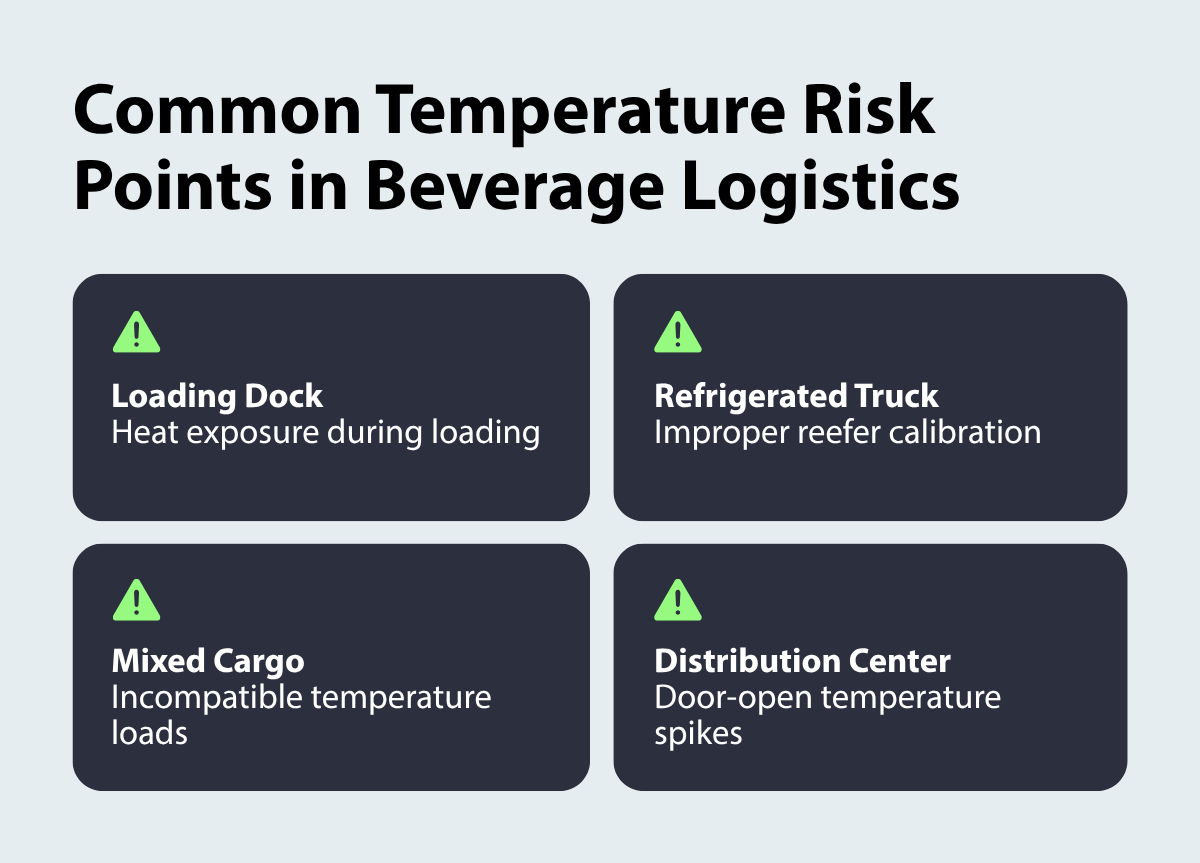
Each stage has specific temperature requirements. A breakdown at any single point can compromise the entire cold chain shipment.
The key components of cold chain logistics break down into four areas. First, cold storage facilities and refrigerated warehouses designed for multi-zone temperature control. Second, temperature controlled transportation via refrigerated trucks and reefer containers. Third, packaging systems built around gel packs, dry ice, insulated liners, and phase change materials. And fourth, monitoring technologies that track temperature, humidity, and location in real time.
Modern cold chain operations increasingly rely on IoT sensors, GPS-based telematics, and automated alert systems.Regulatory mandates like the U.S. Food Safety Modernization Act (FSMA) 204 rule are turning real-time temperature tracing into a competitive differentiator for logistics providers, not just a compliance checkbox.
The Cold Chain: Why Continuity Matters
The cold chain itself is the continuous, unbroken series of temperature controlled environments that protect products from origin to final destination. Think of it as a relay race where the baton is temperature integrity. If any runner drops it, the entire effort fails.
For beverages, maintaining this chain means products should never leave a controlled environment for extended periods. Even brief exposure to ambient conditions during loading, unloading, or transfers between vehicles and warehouses can compromise perishable cargo. This is especially true during summer months, when dock temperatures at distribution centers can spike well above safe thresholds.
The ultimate goal of cold chain logistics is safe delivery, ensuring that products arrive securely and without compromise by maintaining product integrity, compliance, and traceability throughout the process. Cold chain shipping is critical for preventing spoilage, ensuring safety, and maintaining the efficacy of products like vaccines.
A strong cold chain protects product quality and reduces transportation costs caused by spoilage and rejected shipments. It maintains regulatory compliance. It ensures a consistent customer experience. Companies that invest in reliable cold chain infrastructure also build a measurable advantage in brand reputation and customer trust.
For beverage brands operating in competitive markets, the cold chain is not just a logistics concern. It is a brand protection strategy.
Cold Chain Logistics Process: Step by Step
A successful cold chain logistics process depends on careful coordination across multiple operational stages. At each stage, it is crucial to maintain temperature ranges to ensure the integrity and quality of the shipment. Here is how the process works for beverage companies:
At every handoff, whether between warehouses, trucks, or distribution centers, there is a risk of temperature excursions that can compromise product quality. Best practices in cold chain shipping include validating packaging and optimizing routes to ensure product safety.
1. Cold Storage
Before shipping begins, beverages are held in cold storage facilities or refrigerated warehouses designed to maintain stable temperature ranges. These facilities use advanced cooling systems, multi-zone temperature management, and humidity control to keep products in optimal condition. Proper cold storage is especially critical for frozen foods, dairy beverages, and probiotic drinks that must stay within narrow temperature windows.
2. Temperature-Controlled Transportation
The next stage moves products through temperature controlled freight systems. The most common method for beverage logistics is the refrigerated truck. These trucks use a built-in refrigeration unit to hold cold temperatures throughout transit. They must be pre-cooled to the setpoint before loading. Skipping pre-cooling is one of the most common and preventable cold chain failures. Warm trailer walls can raise the internal temperature of a cold chain shipment within minutes.
3. Distribution Centers
At regional distribution centers, products are temporarily stored before moving to retail, wholesale, or direct-to-consumer channels. Cold storage areas at these facilities must maintain the temperature constant until shipments are dispatched for final delivery. Transition zones between loading docks and cold rooms are a known weak point in chain shipping, which is why trained logistics personnel and strict operating procedures are essential.
4. Final Delivery
The last stage involves transporting beverages to the end customer, whether that is a grocery retailer, restaurant, distributor, or consumer doorstep. Maintaining shipment integrity through the final mile is critical. This stage is where temperature fluctuations are most likely, because delivery vehicles often make multiple stops and open their doors repeatedly, exposing temperature sensitive shipments to ambient conditions.
Each handoff between these stages represents a potential risk to temperature integrity. Experienced cold chain shippers build redundancy into their processes at every transition point.
Temperature Requirements for Beverage Categories
Different beverages require different temperature ranges during transportation and storage. The table below outlines common categories and their specific requirements:

Temperature Requirements for Beverage Categories
Maintaining these specific temperature requirements helps ensure that temperature sensitive cargo arrives at the final destination in the condition the consumer expects. A logistics partner experienced in beverage cold chain shipping will understand the nuances of each category and plan routes, packaging, and monitoring accordingly.
Dry Ice in Cold Chain Shipping
Dry ice is a workhorse in cold chain shipping for products that must remain frozen or extremely cold during transit. Unlike standard ice, dry ice sublimates directly from solid to gas at -109.3°F (-78.5°C), creating intensely cold temperatures without leaving liquid water behind. That makes it ideal for protecting frozen beverages, smoothie concentrates, and other perishable cargo that cannot tolerate any thawing.
Dry ice serves several roles in beverage logistics. It ships frozen products over long distances. It maintains cold conditions during extended transit windows where mechanical refrigeration may not be available. And it provides backup cooling inside insulated containers.
Because dry ice is extremely cold, it requires specially designed containers and careful handling protocols. Workers must wear protective gloves. Containers need ventilation to allow CO2 gas to escape safely. For beverage companies shipping frozen goods, dry ice offers reliable temperature control that mechanical systems alone sometimes cannot match. It works especially well for last-mile deliveries or smaller shipments that do not fill an entire refrigerated truck.
Cold Storage: The Foundation of Temperature Integrity
Cold storage is one of the most critical components of cold chain logistics. These facilities maintain controlled environments built specifically for temperature sensitive goods. They use multi-zone temperature systems, advanced refrigeration technology, continuous temperature monitoring, and humidity control systems.
Modern cold storage facilities increasingly use automated systems to track temperature and humidity levels in real time, flagging deviations before they become problems. Therefrigerated warehouse segment was valued at over $238 billion in 2025. This shows the massive infrastructure investment required to keep the global cold chain running.
For beverage companies, the quality of cold storage facilities directly impacts product shelf life and safety. A warehouse that maintains tight temperature ranges for dairy beverages, for example, can extend shelf life by days or weeks compared to a facility with inconsistent temperature control. Choosing the right cold storage partner is one of the most impactful decisions a beverage brand can make.
Chain Shipping: Coordinating Across Multiple Partners
Chain shipping refers to the coordinated movement of temperature sensitive cargo through multiple logistics partners while maintaining the integrity of the cold chain. A single beverage shipment might pass through six or more touchpoints.
Production facility.
Regional cold storage warehouse.
Cross-dock terminal.
Refrigerated truck.
Distribution center.
Delivery vehicle.
Then, finally, the retailer.
Each of those handoffs is a potential failure point. Successful chain shipping depends on reliable cold chain solutions at every link. It requires efficient route planning to reduce transit times. It requires temperature monitoring technology at each transfer point. It also requires trained logistics personnel who understand the stakes of handling perishable goods.
Because beverages are often shipped across long distances, maintaining visibility across the entire supply chain is essential. A shipment that arrives 30 minutes late at a cross-dock in summer heat can experience a temperature excursion significant enough to compromise the entire load. Experienced cold chain shippers coordinate closely with every partner in the chain to prevent exactly this kind of failure.
Liquid Nitrogen in Specialized Applications
Liquid nitrogen is used in some specialized cold chain applications where extremely low temperatures are required. At -320°F (-196°C), liquid nitrogen can rapidly freeze products or maintain cryogenic conditions that standard refrigeration cannot achieve.
In the beverage industry, liquid nitrogen applications are relatively niche. It may be used for flash-freezing specialty products, rapid cooling during production, or in research and development environments. It is more commonly associated with life sciences and pharmaceutical products, where vaccines, biologics, and biological samples require ultra-cold storage.
Because liquid nitrogen creates extremely cold temperature controlled environments, it must be transported in specially designed cryogenic containers under strict regulatory requirements. For most beverage companies, mechanical refrigeration and dry ice will cover their needs. But for brands producing frozen specialty beverages or working in R&D, liquid nitrogen is worth understanding as part of the broader cold chain toolkit.
Cooling Systems That Power the Cold Chain
Reliable cooling systems are the engine behind every functional cold chain. Without consistent, well-maintained refrigeration, nothing else in the logistics process matters.
The most common cooling technologies in beverage cold chain shipping fall into four categories.
Mechanical refrigeration units mounted on refrigerated trucks and trailers.
Insulated containers equipped with phase change materials that absorb and release heat at specific temperatures.
Passive cooling using gel packs or cold packs for shorter shipments or last-mile delivery.
Advanced monitoring systems that track temperature constant levels and trigger alerts when readings drift outside acceptable ranges.
For companies transporting temperature sensitive shipments, investing in reliable cooling systems and regularly maintaining refrigeration equipment is one of the most cost-effective ways to prevent spoilage. A single refrigeration unit failure on a fully loaded truck can result in losses between $100,000 and $500,000, depending on the cargo value.
Packaging Solutions for Cold Chain Shipping
Packaging is the first physical barrier between a beverage product and the outside environment. In cold chain shipping, the right packaging can mean the difference between a product arriving in perfect condition and one that arrives compromised.
Common cold chain packaging materials include gel packs and cold packs for short-duration shipments.
Dry ice works best for frozen products and longer transit windows.
Reusable containers are designed for repeated cold chain use.
Insulated liners fit inside standard shipping boxes.
Vacuum insulated panels offer maximum thermal protection.
Phase change materials are gaining traction because they offer precise temperature control at specific temperature thresholds. Unlike gel packs, which gradually warm up, phase change materials absorb heat energy at a fixed temperature, holding the environment steady for longer periods.
All packaging must be validated before use. That means testing under real-world conditions to confirm it can maintain the required temperature ranges throughout the expected transit duration. Packaging that performs well in a lab but fails on a hot summer route through the southwestern U.S. will eventually cause a problem.
Perishable Cargo: Managing the Risk
Perishable cargo presents unique and costly challenges. Dairy drinks, fresh juices, probiotic beverages, and other temperature sensitive products degrade quickly when exposed to improper temperatures. The FDA identifies the range between 40°F and 140°F (4°C to 60°C) as the "danger zone" where bacteria multiply most rapidly. Beverages that enter this range, even briefly, face accelerated spoilage.
Anestimated 20% of global food loss is caused by an incomplete cold chain. For beverage brands, the consequences of poor temperature management are serious.
Reduced shelf life.
Product spoilage.
Customer complaints.
Regulatory violations.
Rejected loads at the point of delivery.
Each rejected shipment carries direct costs like the lost product itself. It also carries indirect costs like expedited replacement shipments, customer relationship damage, and regulatory scrutiny.
Companies transporting perishable goods must implement strict quality controls, validated packaging, real-time monitoring, and clear escalation protocols for temperature excursions. Working with logistics providers who specialize in handling perishable cargo reduces risk significantly.
Regulatory Compliance in Cold Chain Shipping
Cold chain shipping in the food and beverage industry must meet strict regulatory compliance requirements. In the United States, the Food Safety Modernization Act (FSMA) is the most significant regulation governing the safe transportation of food products.
The FSMA Sanitary Transportation Rule requires shippers and carriers to implement practices that prevent contamination during transport. This translates to:
maintaining proper temperature standards throughout transit.
documenting shipment conditions with verifiable records.
preventing contamination from previous cargo or unsanitary vehicles.
training all personnel involved in transportation operations.
The FSMA 204 rule, which takes full effect in 2026, goes further byrequiring detailed traceability records for high-risk food categories. Organizations like the FDA, USDA, and U.S. Pharmacopeia set strict guidelines for handling perishable and temperature sensitive goods. Compliance protects consumers, prevents costly recalls, and shields companies from legal exposure.
For beverage companies, regulatory compliance is also a market access requirement. Retailers and distributors increasingly require documented proof of cold chain integrity before accepting shipments. Brands that can demonstrate strong compliance records gain a competitive advantage in securing shelf space.
Life Sciences and Cross-Industry Lessons
The life sciences and pharmaceutical industries operate some of the most demanding cold chains in the world. Vaccines, biologics, and biological samples often require storage at -20°C or even -80°C. There is zero tolerance for temperature excursions. The ultra-low temperature requirements of mRNA vaccines during the COVID-19 pandemic pushed the entire cold chain industry to upgrade its infrastructure and monitoring capabilities.
Beverage companies benefit from these advancements. Technologies originally developed for pharmaceutical cold chain logistics are now standard tools for food and beverage shippers.
IoT sensors.
Real-time data loggers.
Automated alert systems.
Validated packaging protocols.
The same rigor that protects a vial of insulin can protect a pallet of cold-pressed juice.
Good Distribution Practices (GDP), originally designed for pharmaceutical logistics, also influence standards in the food industries. These practices mandate accurate record-keeping, documented handling procedures, and validated transportation processes. Beverage brands that adopt GDP-level discipline in their own cold chain operations set themselves apart.
Protecting Your Beverages from Production to Shelf
Cold chain shipping is the foundation that allows beverage brands to deliver safe, high-quality products to customers across the country and around the world. From cold storage facilities and refrigerated trucks to advanced cooling systems and specialized packaging, every step of the cold chain logistics process exists to maintain temperature integrity for products that cannot afford to be compromised.
The beverage industry will continue to grow more complex. Consumer demand for fresh, functional, and health-focused drinks shows no signs of slowing down. Distribution networks are expanding. Regulatory requirements are tightening. And customer expectations for quality are higher than ever.
Brands that invest in reliable cold chain solutions, work with experienced cold chain shippers, and treat temperature management as a strategic priority will protect their products, reduce spoilage, and build the kind of operational credibility that drives long-term growth.
Forsla partners with beverage companies to build and manage cold chain logistics operations that deliver consistent results. If your brand ships temperature sensitive beverages and you need a logistics partner who understands what is at stake, reach out to our team.
Frequently Asked Questions
What temperature range is considered the "danger zone" for perishable goods?
The FDA identifies 40°F to 140°F (roughly 4°C to 60°C) as the danger zone where bacteria growth accelerates most rapidly in food products. Cold chain shipping keeps perishable cargo well below this range to prevent spoilage and maintain food safety.
What role does dry ice play in cold chain shipping?
Dry ice sublimates at -109.3°F (-78.5°C) and is used to keep frozen beverages and temperature sensitive cargo extremely cold during transit. It is especially useful for long-distance shipments or situations where mechanical refrigeration is not available.
What are phase change materials in cold chain packaging?
Phase change materials absorb and release heat energy at a fixed temperature, maintaining a stable environment inside shipping containers. They are increasingly used in reusable containers for cold chain shipping because they offer precise temperature control for extended periods without needing external power.
How can beverage brands reduce spoilage during cold chain transportation?
Brands can reduce spoilage by using validated packaging and pre-cooling vehicles before loading. Monitoring temperatures in real time with IoT sensors is essential. Choosing experienced cold chain logistics providers and building redundancy into every handoff point in the supply chain also makes a significant difference.
What is the cost of a cold chain temperature excursion?
A single temperature excursion can result in losses ranging from $100,000 to $500,000 or more, depending on cargo value. Beyond direct product loss, excursions can cause regulatory violations, customer relationship damage, and brand reputation harm.