

Drink Manufacturing and Logistics: From Production Line to Retail Distribution
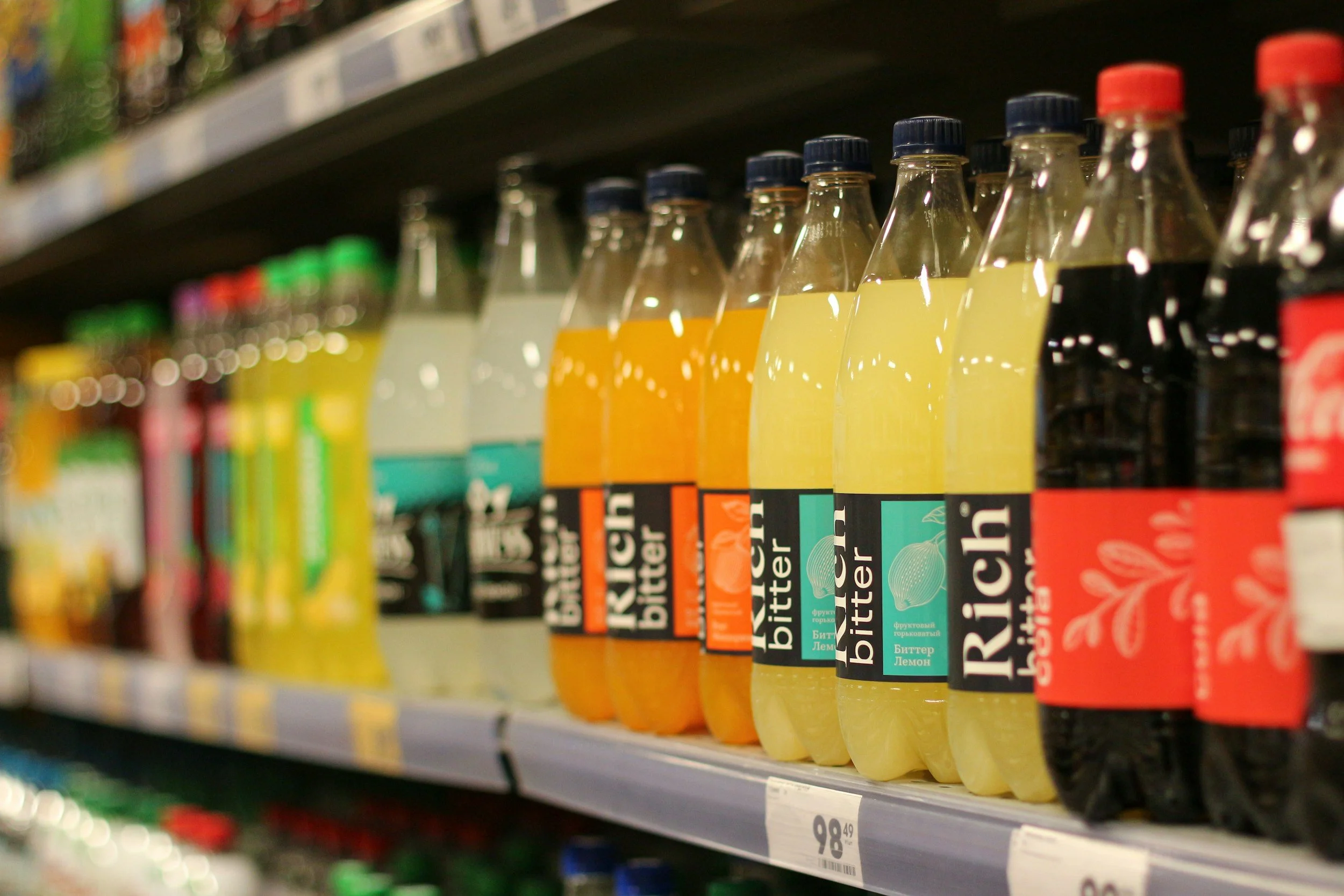
Getting a beverage from concept to store shelf is harder than most people think. The recipe has to scale. The production line has to run clean. The packaging has to survive a truck ride across three states. And the logistics behind all of it has to work every single day, at volume, without fail.
Drink manufacturing sits at the intersection of food science, engineering, and supply chain management. It is one of the most operationally intensive segments in consumer goods. A single misstep during formulation can wreck an entire production batch. A wrong call on packaging can add thousands to freight costs. A gap in distribution planning can leave shelves empty during peak season.
The beverage industry generated over$2.14 trillion in global revenue in 2025, and the pace of growth shows no sign of slowing. Energy drinks alone represent a market worth roughly$86 billion, with cans accounting for over 82% of packaging in that segment. Red Bull sold12.67 billion cans globally in 2024. Behind every one of those cans is a manufacturing operation backed by precise logistics.
Soft drinks are the most widely manufactured beverage in the world, with soda having a long history of popularity, especially in American towns where it evolved from a pharmacy refreshment to a mass-produced staple. Bottled water is the second most popular manufactured beverage, and pre-packaged juices also make up a significant segment of the drink manufacturing industry.
This guide covers how drink manufacturing works, how every production decision connects to logistics, and why the link between making beverages and moving them determines whether a brand grows or stalls.
The Beverage Industry Today: Scale, Speed, and Constant Change
The modern drink industry spans an extraordinary range of product categories. Carbonated soft drinks. Bottled water. Juices. Tea and coffee. Dairy beverages. Wine and beer. Spirits. Hard seltzers. Functional beverages loaded with probiotics, adaptogens, and vitamins. Non-alcoholic options like mocktails and sparkling waters. Ready-to-drink cocktails. The list grows every year.
Beverage manufacturers are constantly developing and producing new drinks to meet changing consumer preferences, driving innovation through research, product development, and the commercialization of novel beverage products.
At one end, power brands like Coca-Cola and Pepsi run global manufacturing and distribution networks that process billions of units annually. Coca-Cola alone posted$14.7 billion in gross profit in 2025. At the other end, hundreds of startup beverage brands launch each year with small production runs and regional distribution ambitions.
What connects them all is one uncomfortable truth: the beverage manufacturing industry rewards execution, not ideas. A brilliant formula means nothing if the production process cannot replicate it at scale. A perfectly manufactured product means nothing if logistics cannot get it to the customer fresh, on time, and undamaged.
Several forces are actively reshaping drink manufacturing:
Health-driven reformulation. Low-sugar, zero-sugar, and functional claims now appear on roughly31% of new beverage SKUs in the US. Brands that cannot formulate for these trends lose shelf space.
Premiumization. Consumers are trading up. Craft spirits, specialty coffee, and premium sparkling water command higher prices but demand higher production standards and more careful handling during logistics.
Sustainability pressure. Packaging choices now carry brand-level consequences. Aluminum beverage cans reached a75% global recycling rate in 2023, compared to 47% for PET and 42% for glass. That gap is influencing packaging decisions across the beverage business.
SKU proliferation. More flavors, more sizes, more packaging formats. This creates manufacturing complexity and multiplies logistics challenges at the warehouse and distribution level.
For any beverage company, large or small, the ability to manufacture efficiently and distribute reliably is the foundation of commercial success.
The Beverage Manufacturing Process: How Drinks Get Made
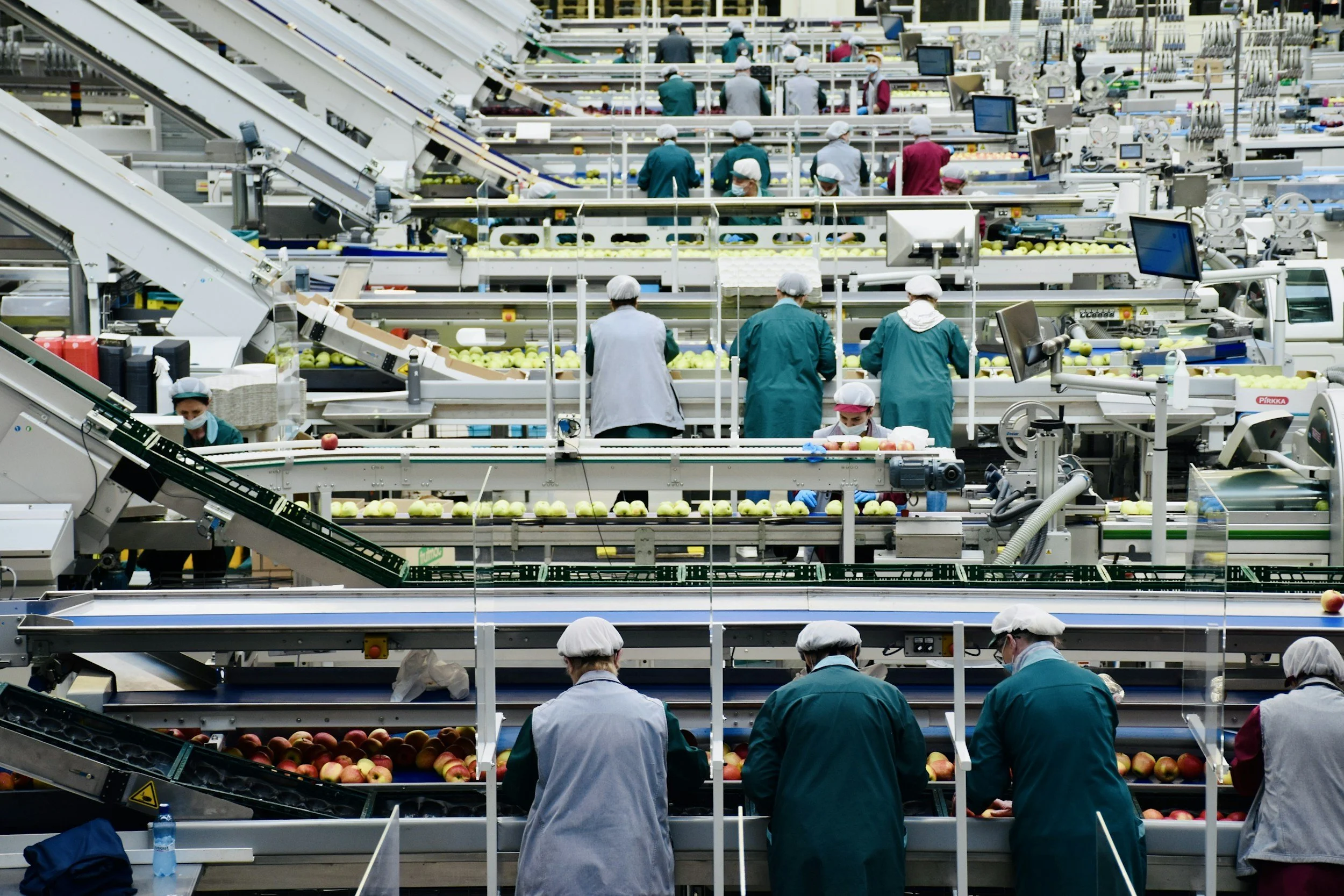
The beverage manufacturing process follows a precise sequence. Each stage feeds the next. And each stage carries consequences that show up later in the supply chain.
Beverage Formulation
Beverage formulation is where the product is born. It defines taste, texture, nutritional value, shelf stability, and regulatory compliance. Everything that happens downstream depends on decisions made here.
For a carbonated soft drink, formulation involves balancing sweetener levels, acidity, flavor compounds, and carbonation pressure. For an energy drink, it means calibrating caffeine content alongside B-vitamins, taurine, amino acids, and flavor masking agents. Energy drink formulation has become especially sophisticated. Celsius's$1.8 billion acquisition of Alani Nu in 2025 illustrates how much value the market places on strong formulations that resonate with consumers.
Formulation also determines logistics requirements. A shelf-stable sparkling water can sit in an ambient warehouse. A cold-pressed juice with live cultures needs refrigeration from the moment it is made. A carbonated beverage must retain pressure during storage and transit. These are logistics decisions disguised as formulation decisions. Brands that think about distribution during the formulation stage avoid expensive corrections later.
Sourcing Raw Ingredients
Every drink starts with raw ingredients: water, sugar, syrups, fruit concentrates, flavoring agents, colorants, preservatives, and functional additives. Water treatment is a critical early step. The quality and mineral content of the water base affects flavor consistency across every batch.
Reliable sourcing is essential. Shortages of key materials like CO2 and aluminum have disrupted beverage production globally in recent years. Beverage companies that diversify their supplier base and maintain buffer stocks for critical inputs handle these disruptions with less damage to production schedules.
Seasonality adds another layer of complexity. Agricultural inputs like citrus concentrates and berry extracts fluctuate in price and availability depending on harvest conditions. Production planning has to account for these fluctuations months in advance.
Mixing, Homogenization, and Quality Control
Once raw ingredients arrive, they are blended in controlled environments according to the commercial formula. Homogenization ensures the mixture is uniform. Without it, ingredients can separate or clump, especially in dairy beverages, protein drinks, and juices with pulp.
Preparing a commercial formula that works consistently across thousands of batches is one of the hardest parts of drink manufacturing. A recipe that tastes perfect in a 50-liter test batch may behave differently at 10,000 liters. Ingredient interactions change at scale. Sweetness perception can shift. Color may vary. This is where in-depth knowledge of food science and production chemistry becomes essential.
Quality control happens at every step. Sensors check pH levels, Brix (sugar content), temperature, and viscosity. In modern facilities, AI-powered inspection systems use computer vision to catch defects in real time during the filling and labeling stages.
Filling: Hot Fill vs Cold Fill
Filling is where the liquid enters its final container. The method used has significant implications for product quality, shelf life, packaging choice, and logistics.
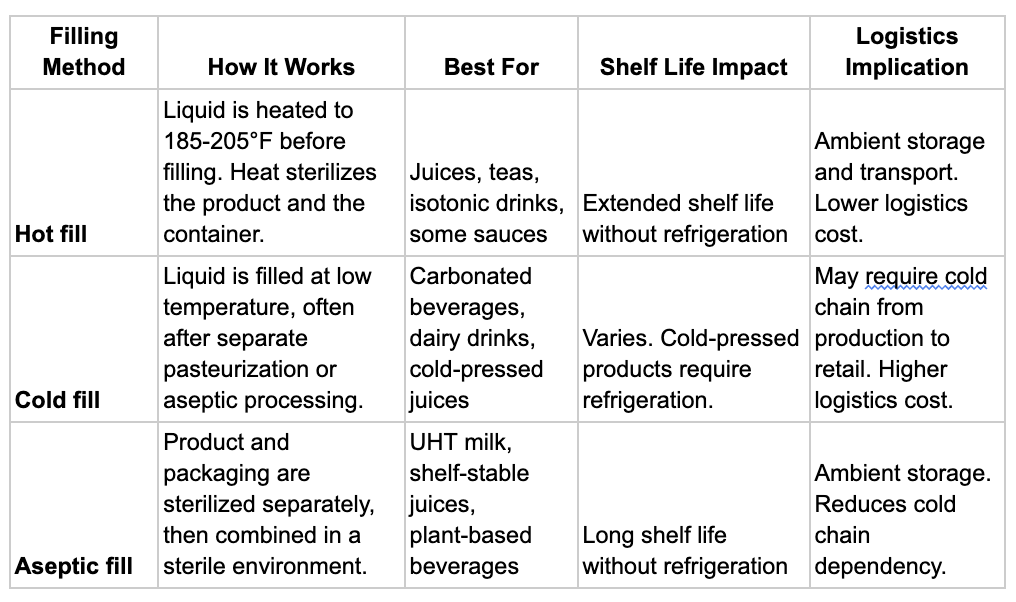
The choice between hot fill, cold fill, and aseptic processing shapes the entire downstream supply chain. It determines what kind of warehouse is needed, what kind of trucks are required, and how far the product can travel before quality degrades. These are decisions that should be made with logistics in mind, not after the fact.
Pasteurization
Pasteurization uses heat to kill bacteria and extend shelf life. Most commercially produced beverages go through some form of pasteurization. Methods range from high-temperature short-time (HTST) pasteurization for dairy products to tunnel pasteurization for canned beers and carbonated beverages.
Without pasteurization, shelf stability drops and contamination risk climbs. The method chosen affects production line speed, energy costs, and the product's tolerance for temperature variation during distribution.
Packaging and Labeling
Packaging is where manufacturing meets marketing. It must protect the product, survive transit, look good on the shelf, and increasingly meet sustainability expectations.
Aluminum cans are gaining ground fast. The global aluminum beverage cans market was valued at roughly$37.7 billion in 2025 and is growing at 6% annually. Cans are lightweight, stackable, cool down fast, and are infinitely recyclable. In recycling value, aluminum is worth$1,338 per ton compared to $215 per ton for PET plastic and a negative value for glass.
Plastic bottles (PET) remain dominant for bottled water and soft drinks due to their low cost and versatility. Glass bottles serve the premium end of the market, including wine, craft spirits, and specialty beverages, but add significant weight and breakage risk to logistics operations.
The label is the first thing a consumer sees. It tells the product's story before anyone takes a sip. Design must match product category and consumer expectations. Bold, high-energy graphics work for energy drinks. Clean, minimal labels suit wellness beverages. Beyond appearance, labels must meet FDA and state-level regulatory requirements for ingredient disclosure, nutrition facts, and health claims.
Beverage Manufacturer vs Beverage Manufacturing Company
A beverage manufacturer produces the physical product. A beverage manufacturing company may offer a wider range of services, including formulation support, packaging design, regulatory guidance, and distribution coordination.
In-House Manufacturing
Companies that control their own production facilities gain full oversight of quality, scheduling, and process optimization. This model suits established beverage companies with predictable volumes and the capital to invest in equipment and facilities. Brands like Ocean Spray and regional craft breweries operate in-house production backed by dedicated supply chain teams.
Contract Manufacturing and Co-Packing
Many beverage brands, especially emerging ones, outsource production to contract manufacturers. Co-packing reduces upfront capital requirements and gives brands access to specialized equipment and industry expertise without building their own facility.
The trade-off is control. When production happens at a third-party facility, the brand depends on the co-packer's quality systems, scheduling availability, and logistics coordination. Beverage manufacturers that offer end-to-end support, from formulation and production planning through packaging and logistics, simplify this relationship and reduce the risk of gaps between manufacturing output and distribution readiness.
Choosing the right manufacturing partner can make or break a new beverage brand. The co-packer's capabilities around filling methods, packaging formats, and production volume flexibility directly affect product quality and speed to market.
Beverage Development: Turning Ideas Into Marketable Products
Beverage development is the broader process of turning a concept into a commercial product. It starts with market research: who is the target consumer, what do they want, and what gap exists in the market?
From there, development moves into formulation, taste testing, regulatory review, and pilot production. Many start-up beverage companies fail at this stage because they lack the expertise to navigate the complexity involved. The beverage manufacturing industry is full of trade secrets and specialized knowledge. Emerging companies often need to acquire that knowledge through partnerships with experienced drink manufacturers, flavor houses, and food scientists.
Consumer trends are accelerating the pace of beverage development. Functional beverages, those offering specific health benefits like gut health, immunity, or cognitive function, are among the fastest-growing segments. This creates pressure to innovate quickly. But speed without production rigor leads to products that do not scale or that create logistics problems once they hit the market.
Beverage Production: Scaling Without Breaking
Beverage production at scale introduces a different set of challenges than small-batch manufacturing. Equipment utilization must stay high. Waste must stay low. Batch-to-batch consistency must be maintained across millions of units.
Automation is central to modern drinks production. Robotic filling systems, automated label applicators, CIP (Clean-in-Place) systems, and AI-driven quality inspection all reduce labor dependency and improve throughput. Companies in drink manufacturing are adopting these technologies to address persistent labor shortages and rising material costs.
Scaling production also means scaling logistics. More output requires more warehouse space, more freight capacity, and tighter coordination with distributors. A common and costly mistake is scaling production without scaling logistics infrastructure at the same pace. This leads to finished products sitting in the facility because there is nowhere to put it or no trucks to move it.
The brands that scale successfully are the ones that plan production volume alongside distribution capacity. The two cannot be separated.
Regulation and Compliance in Beverage Manufacturing

Regulation touches every stage of drink manufacturing. From the moment raw ingredients arrive at a facility to the final case loaded onto a distribution truck, beverage manufacturers must meet strict safety and quality standards set by agencies like the FDA and EPA.
Good Manufacturing Practices (GMPs) and Hazard Analysis and Critical Control Points (HACCP) protocols form the baseline. Every production facility must follow these frameworks. Every batch must meet them. There is no flexibility on this.
For large beverage companies like Coca Cola and Pepsi, compliance is a continuous process. Manufacturing procedures, packaging materials, and labeling must be reviewed and updated as regulations shift. This extends beyond food safety. Environmental regulations affect supply chain decisions. Labor laws shape workforce operations. Tax compliance varies across states and markets, adding cost and complexity at every tier of the beverage business.
Rapidly evolving regulations regarding sugar taxes and health claims present additional compliance challenges for the beverage industry. A product approved for sale in one state may face labeling restrictions or tax obligations in another. Brands expanding into new geographies need to account for these differences during distribution planning.
The cost of getting compliance wrong is severe. Recalls drain budgets. Brand reputation damage takes years to repair. Legal exposure can cripple operations. This is why leading beverage manufacturing companies invest heavily in compliance departments and quality assurance systems. In an industry where quality and safety are non-negotiable, regulatory compliance is not a cost center. It is critical infrastructure.
Sustainability and Environmental Impact in the Beverage Industry
The pressure for sustainable and eco-friendly packaging is increasing in the beverage industry due to consumer demand. This is no longer a marketing angle. It is an operational requirement that affects sourcing, production, packaging, and distribution decisions.
The biggest shift has been in packaging.
Manufacturers invest in recyclable or biodegradable packaging to address sustainability concerns and reduce operational costs.
Aluminum cans have become the preferred format for sustainability-focused brands, partly because roughly 75% of all aluminum ever produced is still in circulation today.
That level of material longevity is unmatched by PET plastic or glass.
Beverage companies are also experimenting with biodegradable alternatives and reducing dependence on single-use plastics.
These changes are not simple. Switching packaging formats affects filling line configuration, freight costs, warehouse stacking, and shelf presentation.
The transformation goes deeper than packaging. Industry leaders are investing in technologies that reduce water consumption and improve energy efficiency across production operations. Every percentage point of improvement in resource efficiency translates to real margin impact in a business where margins are already tight. Some companies are piloting electric delivery fleets, rethinking the distribution equation from the ground up even when the short-term costs are higher.
The companies that treat sustainability as an integrated part of operations rather than an add-on initiative are better positioned to navigate regulatory changes, capture cost efficiencies, and build consumer loyalty in a market where environmental awareness increasingly drives purchasing decisions.
Innovation and Trends Shaping Beverage Manufacturing
The beverage manufacturing industry is evolving fast. Consumer preferences are shifting. Regulatory pressure is increasing. And the companies that cannot adapt their production and distribution models are losing ground.
The push toward low-sugar and no-sugar formulations is one of the most visible trends. This is driven by both health-conscious consumers and regulatory pressures like sugar taxes. Beverage companies across the market are reformulating their portfolios. Energy drink manufacturers are experimenting with adaptogens, nootropics, and clean-label ingredients to capture segments that traditional caffeine-and-sugar products can no longer reach. Functional beverages, such as those containing probiotics, are experiencing increased demand as consumers focus on health and wellness.
On the technology side, automation and robotics are being rapidly adopted to improve operational efficiency amid labor shortages.
AI systems support production optimization and quality control.
Blockchain is being tested for supply chain transparency and traceability from raw ingredients to finished beverages.
IoT sensors monitor equipment health in real time and track shipment conditions across the distribution network.
Route optimization software reduces fuel costs. Warehouse management systems track inventory at the SKU level.
Demand forecasting tools help brands match production volumes to actual market signals rather than guesswork.
The promise of these technologies is real. But implementation is uneven. Many beverage companies have invested in data infrastructure without fully connecting it to their production and distribution workflows. Having real-time data does not automatically create operational efficiency if procurement and quality control processes remain manual.
The rise of e-commerce and direct-to-consumer sales channels has also changed how beverage brands reach customers. Social media engagement and personalized marketing campaigns are now central to brand building. But many companies have layered these digital strategies onto distribution models that were never designed for individual consumer orders. Beverage shipping regulations vary by state. Fulfillment for single-unit orders is far more complex than pallet-level retail distribution. The brands that succeed will be the ones that align their digital capabilities with logistics infrastructure that can actually deliver on the promises being made.
Freight Planning and Transportation in Drink Manufacturing
Moving beverages is expensive. The products are heavy. Liquids shift weight during transit. Glass breaks. Cans dent. Carbonated beverages lose quality if exposed to heat. Every mile between the production facility and the customer adds cost and risk.
Freight planning aligns production output with transportation capacity and delivery schedules. For beverage companies, this means managing full truckload (FTL) shipments for large orders, less-than-truckload (LTL) for smaller deliveries, and sometimes multi-modal transport combining truck, rail, and ocean for long-distance shipments.
Seasonal demand makes freight planning harder. Most beverage categories see peak consumption during summer months. That means trucking capacity gets tight exactly when brands need it most. Planning freight well ahead of peak season, locking in carrier commitments, and building flexibility into shipping schedules are all critical practices.
A logistics partner with deep experience in beverage freight helps manufacturers avoid the capacity crunch. Forsla specializes in beverage logistics and works with brands to plan freight around production cycles, seasonal demand, and retailer delivery windows.
Supply Chain Bottlenecks That Derail Beverage Manufacturing
Supply chain bottlenecks are a persistent threat. Raw material delays, equipment breakdowns, packaging shortages, and transportation disruptions can all halt production or delay delivery.
Rising operational costs, including raw material shortages and inflation, continue to squeeze profit margins across the beverage manufacturing industry. Drink manufacturing faces challenges such as complex supply chain management and stringent regulatory compliance across multiple jurisdictions.
The most effective mitigation strategies are straightforward: diversify suppliers, maintain buffer inventory for critical inputs, invest in supply chain visibility tools, and work with logistics partners who can adapt quickly when disruptions occur.
Distributor Networks and Retail Distribution
Getting beverages onto retail shelves requires distributor networks. These networks connect manufacturers with wholesalers, regional distributors, and retail partners. The ultimate goal of drink manufacturing is to sell new drinks to consumers through these distribution channels.
For a small craft brand, distribution might mean working with a handful of local wholesalers and self-distributing to nearby stores.
For a mid-size brand, it means building relationships with regional distributors who serve grocery chains, convenience stores, and specialty retailers.
For large beverage companies, it means running national or global networks with dozens of distribution centers and thousands of carrier relationships.
Building and managing these networks takes time, relationships, and logistics expertise. Beverage brands that try to do this entirely in-house often underestimate the complexity. A logistics provider like Forsla can help brands design and manage distribution strategies that match their current scale while building toward growth.
Warehousing and Inventory in the Beverage Business
Warehousing links production to distribution. For beverage manufacturers, it means managing large volumes of heavy products while protecting quality and controlling costs.
Smart inventory management prevents two expensive problems: overproduction that ties up cash and fills warehouse space, and underproduction that frustrates retailers and costs sales. FIFO (first in, first out) rotation ensures older stock ships first, reducing the risk of products expiring before they reach consumers.
Warehouse design for beverages has to account for the weight of liquid products. Racking systems must handle heavy pallets. Floor space must accommodate high-density storage. Temperature zones may be required if the brand produces both shelf-stable and refrigerated products from the same facility.
Cost Management in Beverage Manufacturing Supply Chains
The beverage business runs on thin margins. The major cost categories are raw ingredients, packaging, labor, transportation, and storage.
Packaging cost per unit ranges from $0.10 to $0.50 depending on material and design. Transportation costs fluctuate with fuel prices and carrier demand. Storage costs depend on whether the product requires ambient or temperature-controlled warehousing.
Small improvements at each stage add up. Optimizing pallet configurations to maximize trailer utilization reduces per-unit freight cost. Choosing the right packaging format for the distribution model cuts waste and damage. Aligning production schedules with shipping windows reduces idle inventory.
Forsla helps beverage manufacturers identify and capture these efficiencies across the supply chain, from production planning through final delivery.
Future Outlook for Drink Manufacturing and Logistics
The beverage industry is moving toward smart manufacturing. Consumer demand is driving the shift. People want healthier options. They want sustainable packaging. And they are willing to pay for both. This has forced beverage manufacturers to rethink production lines, ingredient sourcing, and formulation strategies.
Advanced automation and robotics are becoming the backbone of modern beverage production. They are driving efficiency levels that legacy manufacturing processes cannot match. Companies still relying on outdated systems are facing rising operational costs and shrinking competitive positions.
E-commerce has added a new layer of complexity. The surge in online ordering has created fluctuating demand patterns and tight delivery windows that traditional distribution models were never built to handle. Managing thousands of individual consumer orders while maintaining product quality is a different challenge than shipping pallets to retail accounts. Beverage companies are building flexible distribution networks that can expand and contract based on real-time demand without driving up costs. The expertise required to manage this goes beyond traditional logistics. It requires deep market intelligence and the ability to adjust operations quickly.
The beverage giants like Coca Cola and Pepsi understand that research and development, marketing, and distribution must work together. Investing in one without aligning the others does not produce results. The companies that will lead the beverage market going forward are the ones that combine manufacturing capability, logistics agility, and genuine sustainability commitments into a single operating strategy.
Anticipating consumer trends early, adopting emerging technologies while they are still cost-effective, and building distribution networks that can handle market volatility. These are the factors that will separate growing beverage brands from those that stall.
Why the Right Logistics Partner Shapes Your Beverage Business
The logistics partner a beverage manufacturer chooses shapes the cost structure, delivery reliability, and growth trajectory of the entire business. The right partner does more than haul freight. They help plan capacity, manage seasonal demand, protect product quality, and scale operations as the brand grows.
Key factors to evaluate:
Beverage-specific expertise. Does the provider understand the weight, fragility, and temperature sensitivity of liquid products?
Flexible transportation options. Can they handle FTL, LTL, and multi-modal shipping?
Warehousing capabilities. Do they offer ambient and temperature-controlled storage with proper inventory management?
Distribution network. Can they reach your target markets with competitive lead times?
Scalability. Will they grow with you as production volume and market coverage expand?
Forsla's beverage logistics services are built specifically for the drink industry. From warehousing and freight planning to distribution network management, Forsla gives beverage brands the infrastructure and expertise to grow without operational bottlenecks.
Looking for a great partner to work with for your beverage fulfillment needs? Look no further than Forsla. Connect with us today to see how we make a difference to your logistics operations.

Frequently Asked Questions (FAQs)
What is drink manufacturing?
Drink manufacturing is the commercial-scale production of beverages. It covers formulation, raw ingredient sourcing, production, filling, pasteurization, packaging, labeling, and preparation for distribution.
What does the beverage manufacturing process include?
The process includes water treatment, ingredient blending, homogenization, filling (hot fill, cold fill, or aseptic), pasteurization, labeling, and packing into cases and pallets for shipping.
What types of beverages does the beverage manufacturing industry produce?
The industry produces carbonated soft drinks, bottled water, juices, tea, coffee, dairy beverages, energy drinks, beer, wine, spirits, functional beverages, sparkling waters, and mocktails.
What is beverage formulation and why does it matter?
Beverage formulation is the science of designing a drink's recipe, including flavor, sweetness, color, texture, and shelf stability. Formulation decisions also determine whether a product needs cold storage, ambient warehousing, or specialized handling during logistics.
What is the difference between hot fill and cold fill?
Hot fill heats the liquid before packaging to sterilize the product and extend shelf life without refrigeration. Cold fill packages beverages at lower temperatures to preserve freshness. Aseptic fill sterilizes the product and container separately before combining them in a sterile environment.
What is co-packing in the beverage industry?
Co-packing or contract manufacturing is when a beverage brand outsources production to a specialized drink manufacturer. This reduces capital investment and lets brands scale without building their own production facilities.
How does packaging affect beverage logistics?
Packaging determines shipping weight, breakage risk, storage requirements, and cost per unit. Aluminum cans are lightweight, stackable, and highly recyclable. Glass bottles add freight cost and require careful handling. PET plastic bottles offer low cost and flexibility for high-volume products.
What are common supply chain bottlenecks in beverage manufacturing?
Bottlenecks include raw material shortages, production equipment downtime, packaging supply delays, seasonal transportation capacity limits, and regulatory compliance issues across different markets.
Why do many startup beverage companies fail?
Many emerging brands lack the in-depth knowledge required to scale formulation from lab to production, manage packaging and logistics costs, or build distribution networks. Partnering with experienced beverage manufacturers and logistics providers reduces this risk significantly.
What should beverage brands look for in a logistics partner?
Look for beverage industry expertise, flexible transportation and warehousing options, scalable distribution networks, technology for inventory and shipment tracking, and a track record of working with brands at your growth stage.