

How Beverage Manufacturing Logistics Supports Every Stage of Drink Production
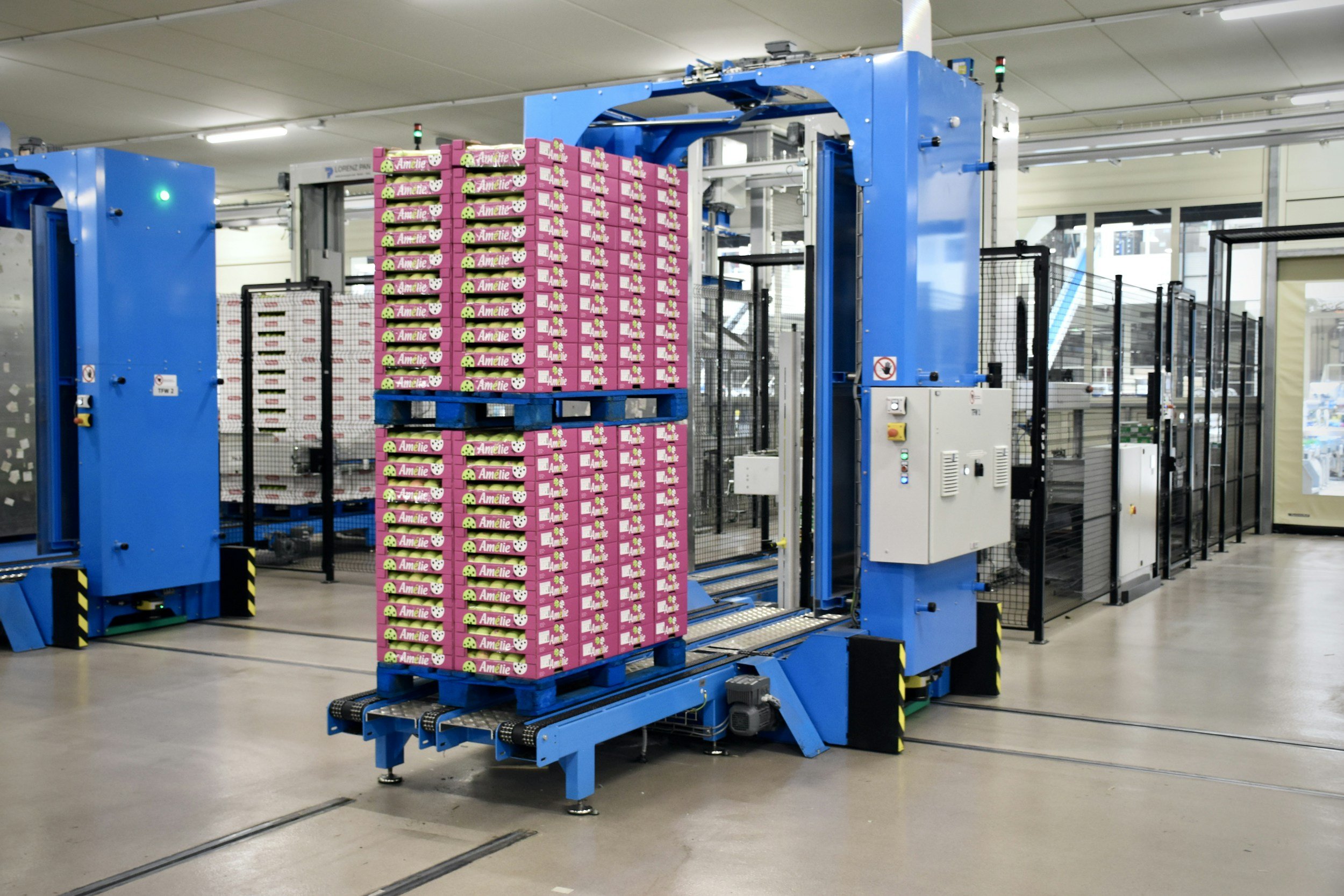
Few industries place as much pressure on logistics as beverage manufacturing. The products are heavy. Many are perishable. Almost all of them are fragile. A single pallet of bottled water can weigh over 2,000 pounds. A truckload of cold-pressed juice has to stay between 33 and 38 degrees Fahrenheit from the moment it leaves the production line until it reaches the store shelf. A shipment of carbonated soft drinks can lose carbonation and quality if exposed to heat during transit.
These operational realities make logistics one of the most important functions inside any beverage manufacturing company. Without the right logistics infrastructure, even the best-formulated drink will arrive late, damaged, or spoiled.
The global beverage market was valued at roughly$1.83 trillion in 2025 and is projected to exceed $2.3 trillion by 2030. Behind those numbers sits a massive and increasingly complex web of supply chains connecting ingredient sourcing, production, cold storage, warehousing, and distribution. Every link in that chain has to work. If one breaks, product quality suffers and revenue walks out the door.
This guide is designed for beverage producers, emerging brands, and supply chain decision-makers who want to understand how beverage manufacturing works and why logistics is the backbone that holds it all together. We will walk through the entire beverage manufacturing process, from formulation through final delivery, and explain how operational choices at each stage impact efficiency, cost, and product quality.
Beverage Manufacturing in the Modern Beverage Industry
The beverage industry is enormous and diverse. It spans everything from carbonated soft drinks and bottled water to juice, tea, energy drinks, wine, spirits, and a growing wave of functional and health-focused beverages. Major beverage companies like Coca-Cola and Pepsi operate global production and distribution networks that deliver billions of units each year. At the same time, hundreds of smaller beverage brands enter the market annually with innovative formulations and niche positioning.
Several forces are reshaping the beverage manufacturing industry right now. Consumer preferences are shifting toward healthier options. The functional beverages market alone was valued at around $131 billion in 2024 and is expected to reach $174 billion by 2030. Bottled water has overtaken carbonated soft drinks as America's most consumed packaged beverage for theninth consecutive year, with per capita consumption hitting 47.3 gallons in 2024. Energy drink formulation is evolving fast, with brands like Ghost and Poppi attracting billion-dollar acquisitions from legacy players.
These shifts create direct implications for logistics. New beverage categories often require different storage conditions, different packaging, and different distribution strategies. A brand launching a probiotic drink faces entirely different cold chain requirements than a company producing shelf-stable sparkling water. As the beverage market grows and diversifies, the logistics behind it has to keep pace.
The Beverage Manufacturing Process: From Concept to Customer
The beverage manufacturing process is a sequence of interconnected stages. Each one feeds into the next, and each one carries logistics implications that affect downstream operations. Here is how a beverage goes from idea to finished product.
Beverage Development and Concept Design
Every new drink starts with a concept. Beverage development involves defining the target consumer, identifying market demand, and shaping the product idea. This is where a beverage brand decides whether it is building an energy drink for athletes, a low-sugar sparkling water for health-conscious millennials, or a premium cold-brew coffee for the morning commute.
At this stage, decisions about positioning and consumer expectations begin to shape logistics requirements. A product designed for convenience stores needs different packaging and delivery cadence than one built for e-commerce fulfillment.
Beverage Formulation
Beverage formulation is the process of designing the drink itself. This involves selecting raw ingredients, balancing flavor and taste, controlling sugar content, achieving the right texture, and ensuring shelf stability. Formulation is part science, part art. It typically requires collaboration with experts in flavor chemistry and food science.
Every formulation decision carries downstream logistics consequences. A juice product with live probiotics will need cold storage and cold chain transport. A carbonated beverage must retain pressure and carbonation throughout storage and shipping. A functional beverage with sensitive ingredients like adaptogens or collagen may require careful handling conditions to maintain potency. Successful beverage formulation balances taste, cost efficiency, regulatory compliance, and the practical realities of how the product will be stored, moved, and delivered.
Sourcing Raw Ingredients
Raw ingredients include water, sugar, flavoring agents, colorants, preservatives, and functional additives. Sourcing these reliably and at consistent quality is critical. Water alone is fundamental. It must be treated and purified before use in production, and its quality directly affects taste and product consistency.
Supply chain disruptions at the ingredient sourcing stage can delay production timelines significantly. Seasonal variability in agricultural inputs like fruit concentrates, poor harvests, or shipping delays on imported ingredients can all create bottlenecks. Beverage companies that build relationships with multiple suppliers and maintain safety stock for critical raw materials tend to weather these disruptions better.
Production, Filling, and Packaging
Once raw ingredients are sourced and the formula is locked, beverage manufacturing moves to production. Ingredients are blended according to the commercial formula, which follows an exact recipe with precise ratios. Many beverages go through homogenization to achieve consistency and prevent clumping. Pasteurization is often applied to ensure food safety and extend shelf life.
Filling is the step where the liquid goes into its container. There are two primary methods:
Hot fill is used for products that require sterilization. The liquid is heated before being poured into the container, which kills bacteria and extends shelf life without refrigeration.
Cold fill is used for beverages that need to retain freshness, like cold-pressed juices or dairy drinks. Cold fill products typically require cold storage from the moment of production.
After filling, products move to packaging and labeling. The label is the first thing a consumer sees. It tells the product's story before they taste the drink. Design has to match the product category. Bold designs work for energy drinks. Clean, minimal packaging works for health-focused beverages. Beyond appearance, packaging must protect the product during transportation. Plastic bottles, aluminum cans, and glass bottles each have different impacts on shipping weight, breakage risk, and storage requirements.
The packing stage organizes finished products into cases and pallets for shipping. Efficient packing reduces product damage, speeds up handling, and lowers transportation costs.
Beverage Manufacturer vs. Beverage Manufacturing Company
The terms beverage manufacturer and beverage manufacturing company are sometimes used interchangeably, but there is a meaningful distinction. A beverage manufacturer is a facility or entity that physically produces beverages. A beverage manufacturing company may handle a broader scope of operations including formulation, packaging design, branding, and distribution.
In-House Manufacturing
Some beverage companies manage their own production facilities, equipment, and logistics end to end. This model provides maximum control over product quality, production schedules, and costs. Large players like Coca-Cola, Pepsi, and Ocean Spray operate extensive in-house manufacturing operations backed by dedicated supply chain teams.
Co-Packing and Contract Manufacturing
Co-packing allows beverage brands to outsource production to specialized drink manufacturers. This approach helps brands reduce capital investment, scale production quickly, and access specialized expertise without building their own facilities. It is especially popular with emerging beverage brands that are still growing their distribution footprint. Choosing the right manufacturing partner is essential. The co-packer's capabilities around cold fill, hot fill, packaging formats, and quality assurance directly impact the final product.
Beverage Formulation and Product Development
Beverage formulation is one of the earliest and most consequential stages in the beverage business. The decisions made during formulation ripple through every subsequent stage of the supply chain.
A successful formula must regulate flavor, taste, color, texture, nutritional values, sweetness, and shelf stability. Every drink begins with a clean base, which sets the stage for clarity and texture. Taste is non-negotiable. If the beverage does not taste good, it will not sell. Functional additives like vitamins, adaptogens, or protein often bring bitterness or unwanted changes in color and texture. These must be balanced carefully against the flavor profile.
Testing early and fixing problems quickly is critical. Beverage development requires collaboration with formulators, food scientists, and often regulatory experts who understand labeling requirements. Consumers increasingly prefer clean labels with transparent, simple ingredient lists. This trend pushes formulation teams to simplify their ingredient decks while still delivering functional benefits.
Formulation also determines logistics requirements. A shelf-stable energy drink has completely different storage and distribution needs than a refrigerated dairy-based beverage. Brands that think about logistics during the formulation stage avoid costly rework later.
Supply Chain in Beverage Manufacturing
The supply chain in beverage manufacturing connects every stage from raw material sourcing to final delivery. A simplified view looks like this: raw ingredients flow to production, production feeds warehousing, warehousing supplies distribution, and distribution delivers to retail or directly to the customer.
In practice, it is far more complicated. Beverage supply chains must handle heavy liquid products, manage fragile packaging, maintain strict product quality standards, and coordinate across multiple suppliers, production facilities, warehouses, and distributors. A single missed temperature threshold during transit can spoil an entire truckload of juice. A delay at one warehouse can cascade into stockouts across multiple retail accounts.
Producing beverages close to target markets usually saves money and time. Regional warehouses positioned near key retail clusters reduce shipping distances and delivery times. A dedicated replenishment team can manage raw materials and plan production schedules to avoid both stockouts and overproduction. Overproduction is especially dangerous for beverage companies. It ties up cash, fills storage capacity, and makes it harder to adapt when consumer demand shifts.
Efficient supply chain management is the difference between a beverage brand that scales smoothly and one that burns through capital fighting operational fires.
Production Logistics: Inside the Beverage Manufacturing Facility
Production logistics is the internal engine of a beverage manufacturing facility. It covers everything that happens between raw material arrival and finished product readiness.
This includes raw material storage and handling, inventory management within the facility, supply of materials to production lines, and coordination between blending, filling, labeling, and packing stages. When production logistics works well, manufacturing runs without interruption. Waste stays low. Equipment utilization stays high.
Modern beverage manufacturing facilities increasingly rely on automation to manage these processes. Robotic arms and automated conveyors handle filling and packaging. CIP (Cleaning-in-Place) systems clean pipes and tanks between production runs without requiring manual disassembly. AI-powered sensors and computer vision inspect products for defects in real time, catching quality issues before they reach the warehouse.
These technologies address real operational problems. Labor shortages in manufacturing are persistent. Downtime between production runs costs money. Manual quality inspection is slow and inconsistent. Automation helps solve all three.
Cold Storage in Beverage Manufacturing Supply Chains
Certain beverage products require cold storage from the moment of production through delivery. This includes juices, dairy-based drinks, functional beverages with live cultures, and many ready-to-drink options.
The food and beverage cold chain logistics market was valued atroughly $82 billion in 2024 and is expected to reach $219 billion by 2034, expanding at a CAGR of 10.3%. That growth reflects the increasing volume of temperature-sensitive beverages moving through global supply chains.
Cold storage facilities maintain controlled temperature conditions. Refrigerated warehousing uses temperature monitoring systems that track conditions continuously. Inventory rotation follows FIFO (first in, first out) protocols to ensure older stock ships before newer stock. This prevents product from sitting in storage past its optimal freshness window.
Finished drinks need to be kept in secure, climate-controlled warehouses that protect shelf life and ensure safety until shipping. For beverage brands that do not operate their own cold storage infrastructure, partnering with logistics providers (3PLs) that specialize in temperature-controlled warehousing is the most efficient path forward.
Packaging and Materials in Beverage Manufacturing
Packaging decisions shape transportation costs, storage requirements, product safety, and consumer perception. The three most common packaging formats in the beverage industry each come with trade-offs.
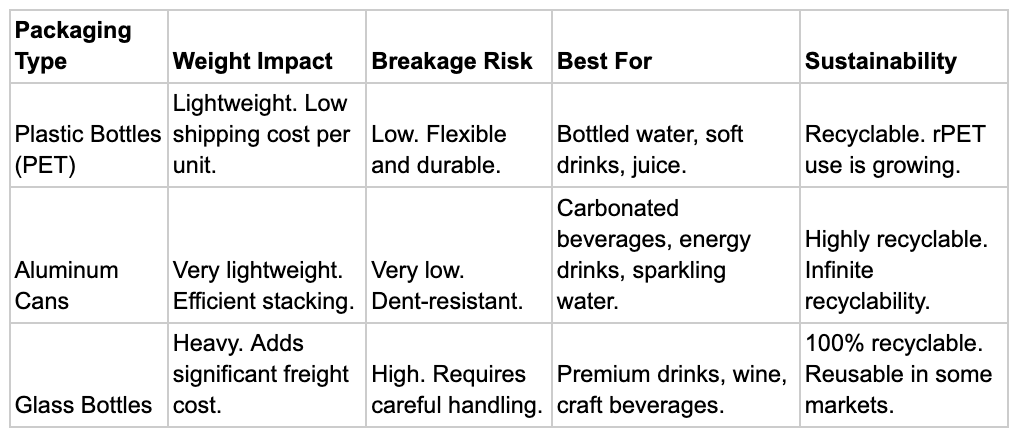
Sustainable packaging is increasingly important. Companies across the beverage industry are implementing initiatives to promote a circular economy. Recyclable, compostable, and paper-based packaging options are gaining traction as eco-conscious consumers influence purchasing decisions. PET packaging still dominates. It accounted for roughly 80% of the bottled water market in 2024, largely because of its convenience, low cost, and recyclability. But aluminum's appeal is growing fast, especially in carbonated beverages and energy drinks, due to its infinite recyclability and premium shelf presence.
The winning package is one that is both practical and appealing. It has to meet technical requirements for the filling line, protect the product during storage and transit, and connect with the customer on the shelf. Functionality matters too. Resealable caps improve convenience. Wide openings suit quick-consumption formats. Each detail affects logistics handling and cost.
Distribution Networks in the Beverage Industry
Distribution networks determine how beverage products get from the warehouse to the customer. The right network design balances speed, reliability, cost, and scalability.
The most common distribution models include direct-to-retail delivery, wholesale and distributor partnerships, and e-commerce fulfillment. Many beverage companies use a combination of all three. Beverage companies are increasingly focusing on direct-to-consumer models and packaging designed for quick delivery and curbside pickup. E-commerce beverage sales continue to grow as consumers become more comfortable ordering drinks online.
Using regional warehouses near target markets is often the most cost-effective setup. It reduces last-mile delivery distances and helps maintain faster replenishment cycles. A wide shipping network allows beverage brands to optimize logistics throughout the supply chain, reaching more retailers with shorter lead times.
For beverage brands scaling from regional to national distribution, the complexity increases significantly. Different retail accounts have different delivery requirements, packaging specifications, and order cadences. A logistics partner with deep experience in beverage distribution can help manage this complexity without requiring the brand to build an in-house distribution team from scratch.
Cold Chain Transport for Beverage Products
Many beverage products require temperature-controlled transport to maintain quality between the warehouse and the customer. This is especially true for cold-pressed juices, dairy beverages, kombucha, functional drinks with live cultures, and certain wine shipments.
Cold chain transport relies on refrigerated trucks and temperature-controlled containers. These vehicles maintain precise temperature ranges throughout the journey. Even short exposure to temperatures outside the acceptable range can compromise product safety and shelf life.
The broader cold chain logistics market reflects the scale of this challenge. Global cold chain logistics was valued at over $292 billion in 2025 and is projected to reach $932 billion by 2034, driven by growing demand for fresh and temperature-sensitive products. Food and beverages account for roughly 75% of cold chain logistics activity.
For beverage brands, cold chain transport is a make-or-break capability. A product that arrives at the wrong temperature gets rejected. A rejected load means lost revenue, wasted product, and a damaged relationship with the retailer. Working with a logistics provider that has proven cold chain capabilities reduces this risk.
Warehousing and Inventory Management
Warehousing bridges the gap between production and distribution. For beverage manufacturers, it involves storing large volumes of heavy liquid products while maintaining quality and optimizing space.
Key considerations include
storage capacity,
product rotation protocols,
the ability to handle multiple SKUs across different temperature zones.
FIFO inventory rotation is standard practice for beverage warehousing because it prevents older products from aging past its shelf life.
Space optimization matters because beverages are dense and heavy relative to their value. A pallet of canned drinks takes up significant floor space and puts heavy load requirements on racking systems. Warehouse design, racking configuration, and picking workflows all need to account for these characteristics.
For brands that lack their own warehousing infrastructure, third-party logistics providers offer managed warehousing solutions that handle both storage and order fulfillment. This approach lets brands focus on production and marketing while the logistics partner manages the physical movement of goods.
Technology in Beverage Manufacturing and Logistics
Technology is transforming both the production and logistics sides of the beverage business.
Inside manufacturing facilities, automation is reducing labor dependency and improving consistency. Robotic systems handle filling and packaging. AI-powered quality control uses computer vision to inspect bottles for defects, check fill levels, and verify label placement at speeds far beyond what manual inspection can achieve. Automated carbonation systems ensure consistent fizz across batches of carbonated beverages.
On the logistics side, IoT sensors track shipment conditions in real time, monitoring temperature, humidity, and location throughout transit. Data analytics platforms help with demand forecasting, allowing brands to better align production with actual market demand. This reduces overproduction and waste while improving fill rates on retailer orders.
Digital transformation is reshaping how beverage companies manage their end-to-end supply chains. The brands and logistics partners that invest in these capabilities gain a real competitive edge in efficiency and reliability.
Cost, Efficiency, and Scalability in Beverage Manufacturing
The beverage business operates on tight margins. The major cost drivers are raw ingredients, packaging materials, transportation, and storage. Each of these can swing significantly based on market conditions, fuel prices, and supply disruptions.
Improving efficiency at each stage of the supply chain is the most reliable way to protect margins. Reducing waste in production, optimizing packing to maximize trailer utilization, and choosing the right warehousing locations all contribute to lower per-unit costs.
Scalability is the other critical factor. A beverage brand that sells well in one region will eventually need to expand production and distribution. Scaling up requires logistics infrastructure that can grow with the business. Brands that lock in scalable logistics partnerships early avoid the painful and expensive process of rebuilding their supply chain mid-growth.
Challenges in Beverage Manufacturing Supply Chains
Beverage supply chains face a set of challenges that are specific to the industry:
Supply chain disruptions. Raw material shortages, shipping delays, and production outages can stall operations. Building supplier redundancy and maintaining buffer inventory helps mitigate these risks.
Temperature sensitivity. Products that require cold chain handling are vulnerable to quality loss at every handoff point. Continuous temperature monitoring and reliable cold chain partners are essential.
Fluctuating demand. Seasonal peaks, promotional surges, and shifting consumer preferences make demand forecasting difficult. Data-driven forecasting tools and flexible warehousing capacity help absorb these swings.
Regulatory compliance. Beverage manufacturers must ensure products meet labeling requirements, food safety standards, and environmental regulations across every market they sell in. Compliance complexity increases as brands expand into new geographies.
Overproduction risk. Producing more than the market absorbs ties up cash, fills warehouse space, and creates waste. Right-sizing production runs based on real demand signals is critical.
Role of Beverage Logistics in Business Success
Logistics is a direct driver of business performance for beverage companies. Effective beverage logistics ensures consistent product quality, on-time delivery, and customer satisfaction. When logistics works, products show up fresh, on time, and in good condition. Retail relationships stay strong. Consumers stay loyal.
Poor logistics creates the opposite outcome. Late deliveries lead to stockouts. Temperature excursions damage product quality. Inefficient warehousing drives up costs. Each of these problems erodes the trust that beverage brands depend on.
For growing beverage brands in particular, logistics can be the bottleneck that limits growth or the engine that accelerates it. Getting logistics right early creates a foundation that supports everything else.
Choosing the Right Logistics Partner for Beverage Manufacturing
Selecting the right logistics partner is one of the most important decisions a beverage manufacturer can make. The right partner does more than move boxes. They become an extension of the brand's operations.
Important factors to evaluate include industry expertise, cold chain capabilities, distribution network reach, and the ability to scale alongside the brand's growth. A logistics partner with deep experience in beverage logistics understands the specific handling requirements, temperature protocols, and delivery cadences that the beverage industry demands.
Forsla works with beverage brands to manage the logistics complexity that comes with producing, storing, and distributing drink products. From temperature-controlled warehousing and cold chain transport to distribution network management and fulfillment, Forsla provides the infrastructure and expertise that beverage companies need to grow without operational friction.
For beverage brands looking for a logistics partner that understands the unique demands of the drink industry, working with a provider that has purpose-built capabilities for beverage logistics makes a measurable difference in cost efficiency, delivery reliability, and product quality.
What It Takes to Build a Resilient Beverage Supply Chain
Beverage manufacturing is a complex, high-stakes operation. Every stage demands coordination and precision. From sourcing raw ingredients to delivering the finished product to a retail shelf or a customer's door, logistics is the thread that holds the entire process together.
The brands that succeed in the competitive beverage industry are the ones that treat logistics as a strategic function, not a back-office cost center. They invest in cold chain infrastructure. They build scalable distribution networks. They partner with logistics providers that understand how beverages move.
For growing beverage brands, building a resilient supply chain is a strategic advantage that compounds over time. The earlier you get it right, the faster you grow.
Looking for a great partner to work with for your beverage fulfillment needs? Look no further than Forsla. Connect with us today to see how we make a difference to your logistics operations.
Frequently Asked Questions (FAQs)
What is beverage manufacturing?
Beverage manufacturing is the process of producing drinks at commercial scale. It includes formulation, ingredient sourcing, production, filling, packaging, labeling, and distribution.
What is the difference between hot fill and cold fill in beverage production?
Hot fill heats the liquid before filling to sterilize the product and extend shelf life without refrigeration. Cold fill is used for beverages that need to retain freshness and typically require cold storage from production through delivery.
What is co-packing in the beverage industry?
Co-packing, or contract manufacturing, is when a beverage brand outsources production to a specialized manufacturer. It reduces capital investment and lets brands scale quickly without building their own facilities.
What packaging is most common in beverage manufacturing?
Plastic bottles (PET), aluminum cans, and glass bottles are the three most common formats. PET dominates bottled water. Aluminum cans are popular for carbonated soft drinks and energy drinks. Glass is used for premium and wine products.
How does the beverage industry use technology in manufacturing?
Beverage manufacturers use automation for filling and packaging, AI for quality control, CIP systems for equipment cleaning, and IoT sensors for shipment tracking and temperature monitoring.
What are functional beverages?
Functional beverages are drinks formulated to provide specific health benefits beyond basic hydration. They include energy drinks, probiotic beverages, protein-enhanced drinks, and immunity-boosting formulations.
What role does warehousing play in beverage logistics?
Warehousing stores finished products between production and distribution. For beverages, it must handle heavy volumes, maintain product quality through temperature control, and follow FIFO rotation to ensure freshness.
Why is beverage formulation important for logistics?
Formulation determines whether a product needs cold storage, standard warehousing, or specialized handling. A shelf-stable energy drink has different logistics needs than a refrigerated probiotic juice. Planning logistics during formulation prevents costly adjustments later.